Amorphous Objects by Luna Haverkorn
This project explores how insights from psychological patterns can inform the development of design objects, encouraging human interaction.

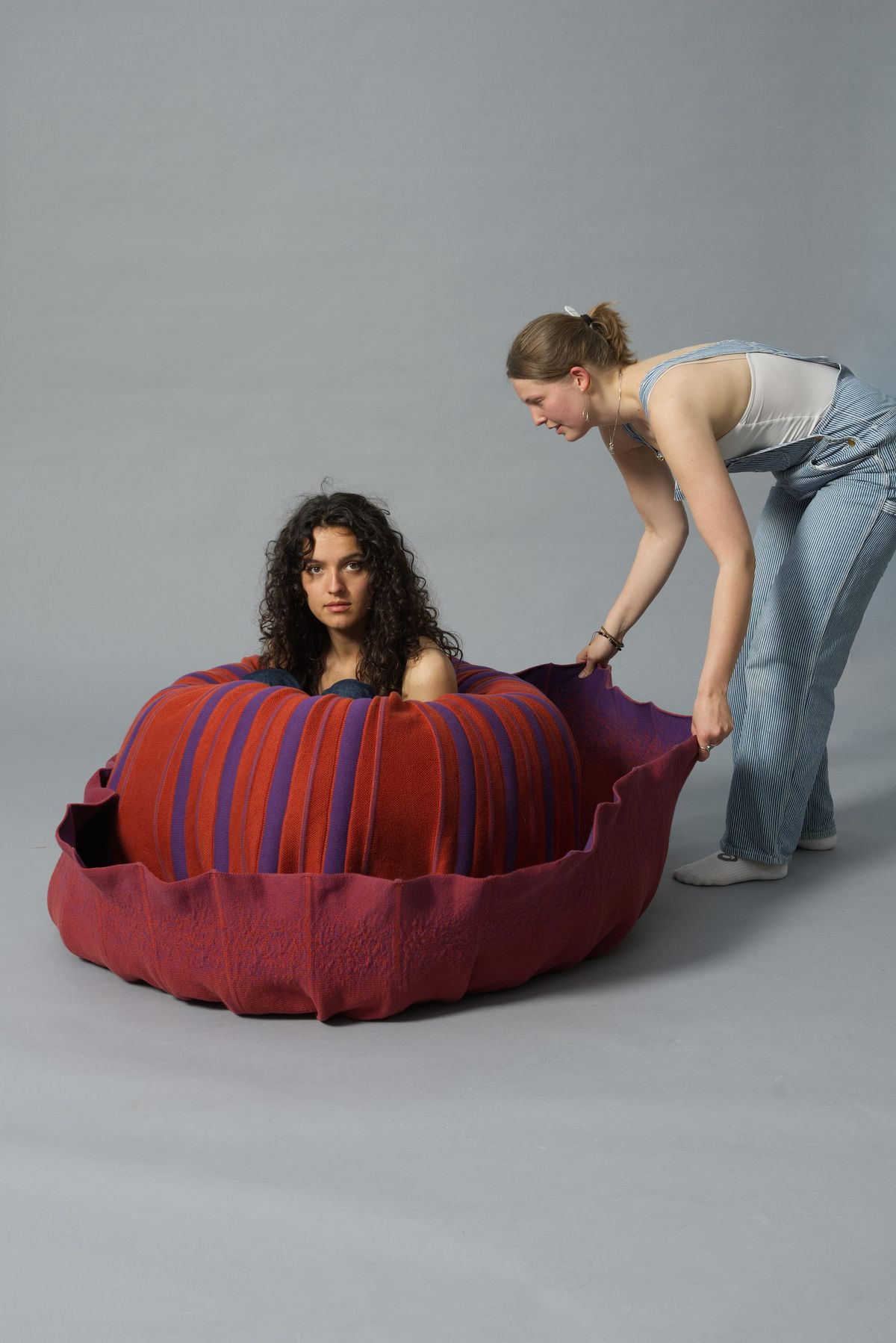
Drawing inspiration from the natural environment, Luna observes how forms such as sea anemones and leaves expand and contract, or how seaweed moves beneath the water's surface. She then explores how these organic movements can be translated through the body, using textiles as a medium for interaction.
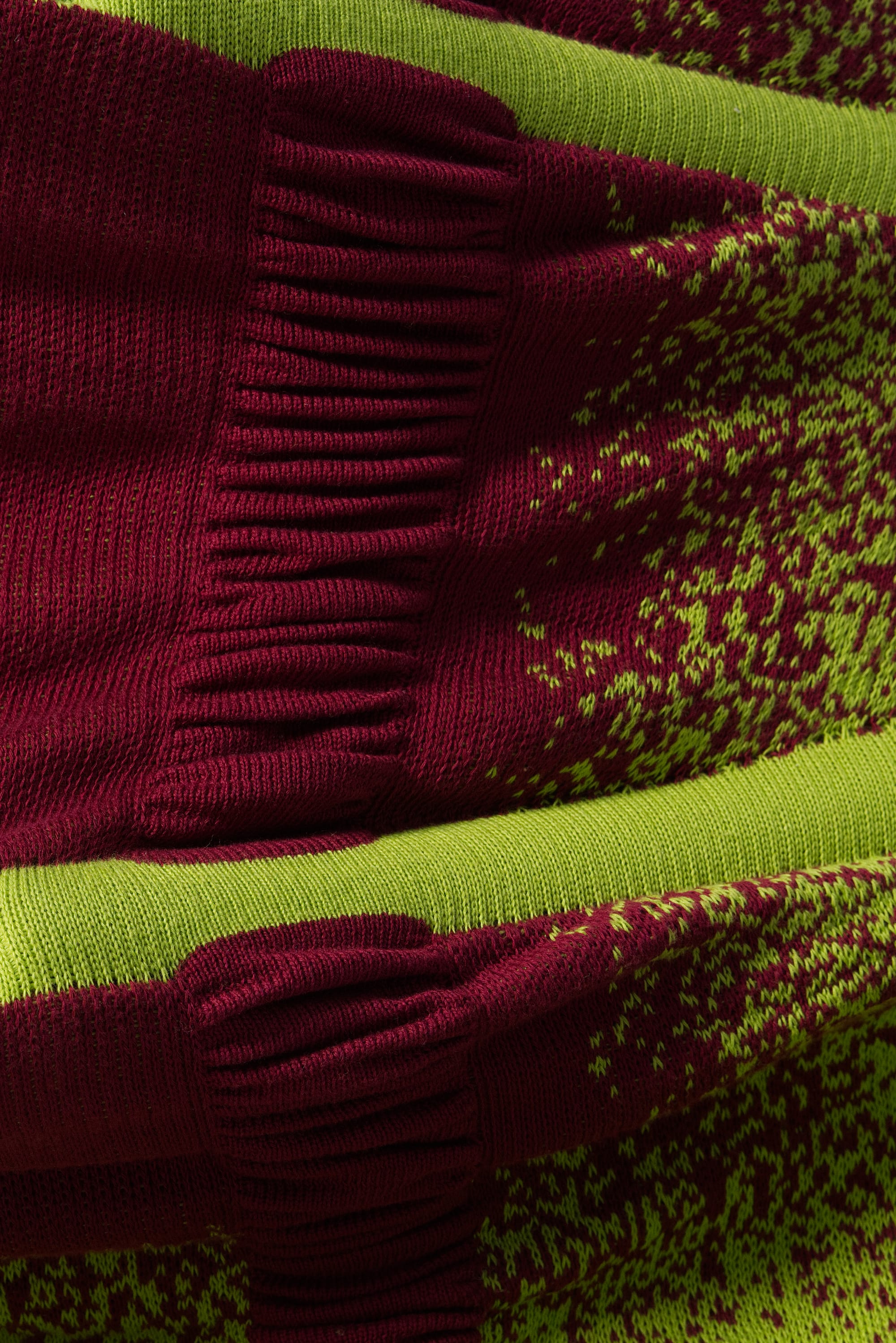
"I think about how a single yarn grows into a three-dimensional form and how its structure shapes movement, flexibility and interaction."
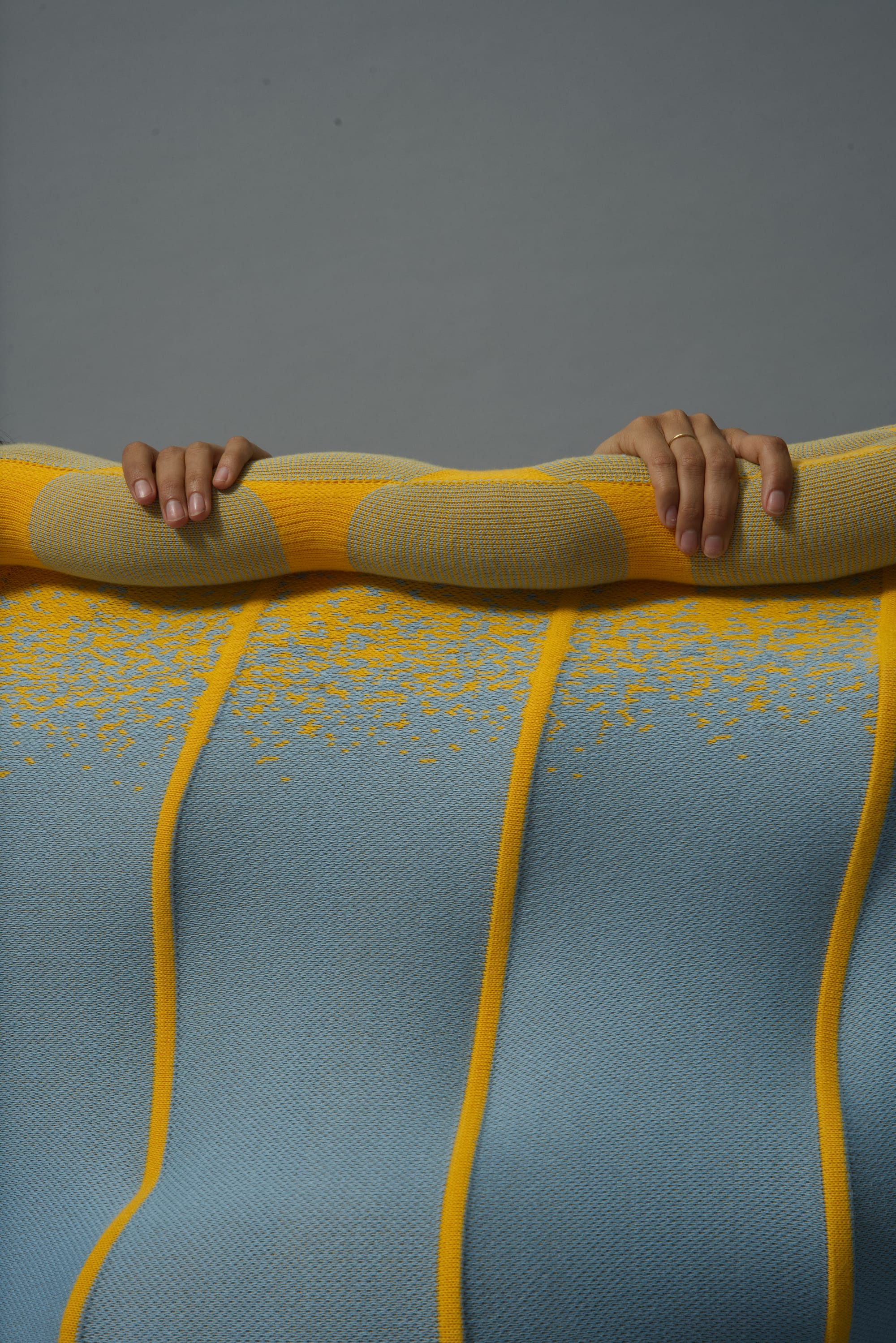
After completing a Bachelor's in Product Design at the Willem de Kooning Academy in Rotterdam, Luna Haverkorn found herself increasingly drawn to working with textiles. Having already begun creating interactive designs, pursuing a Master's in Textile Interaction Design at the Swedish School of Textiles, specialising in knitting, became a natural next step.
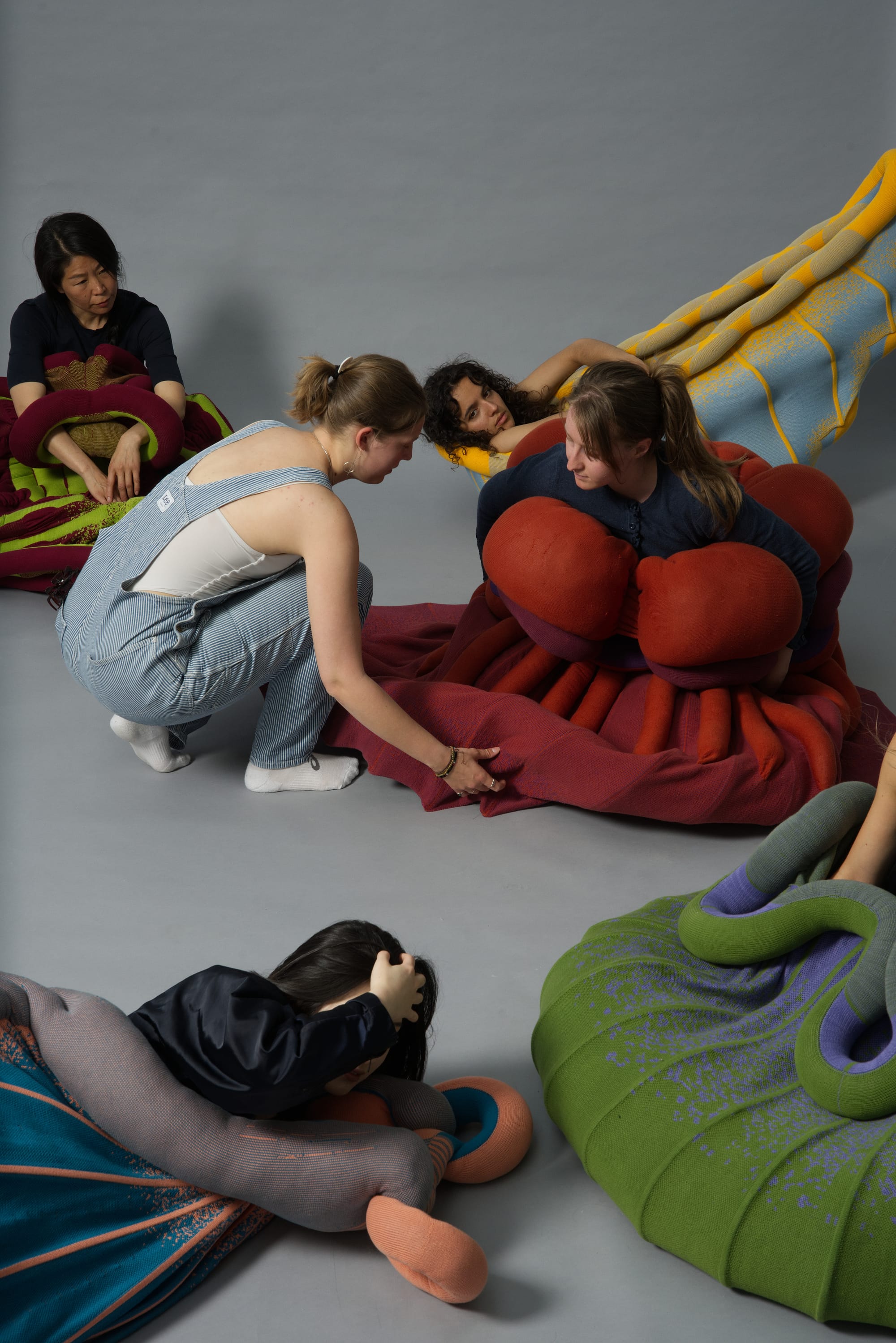
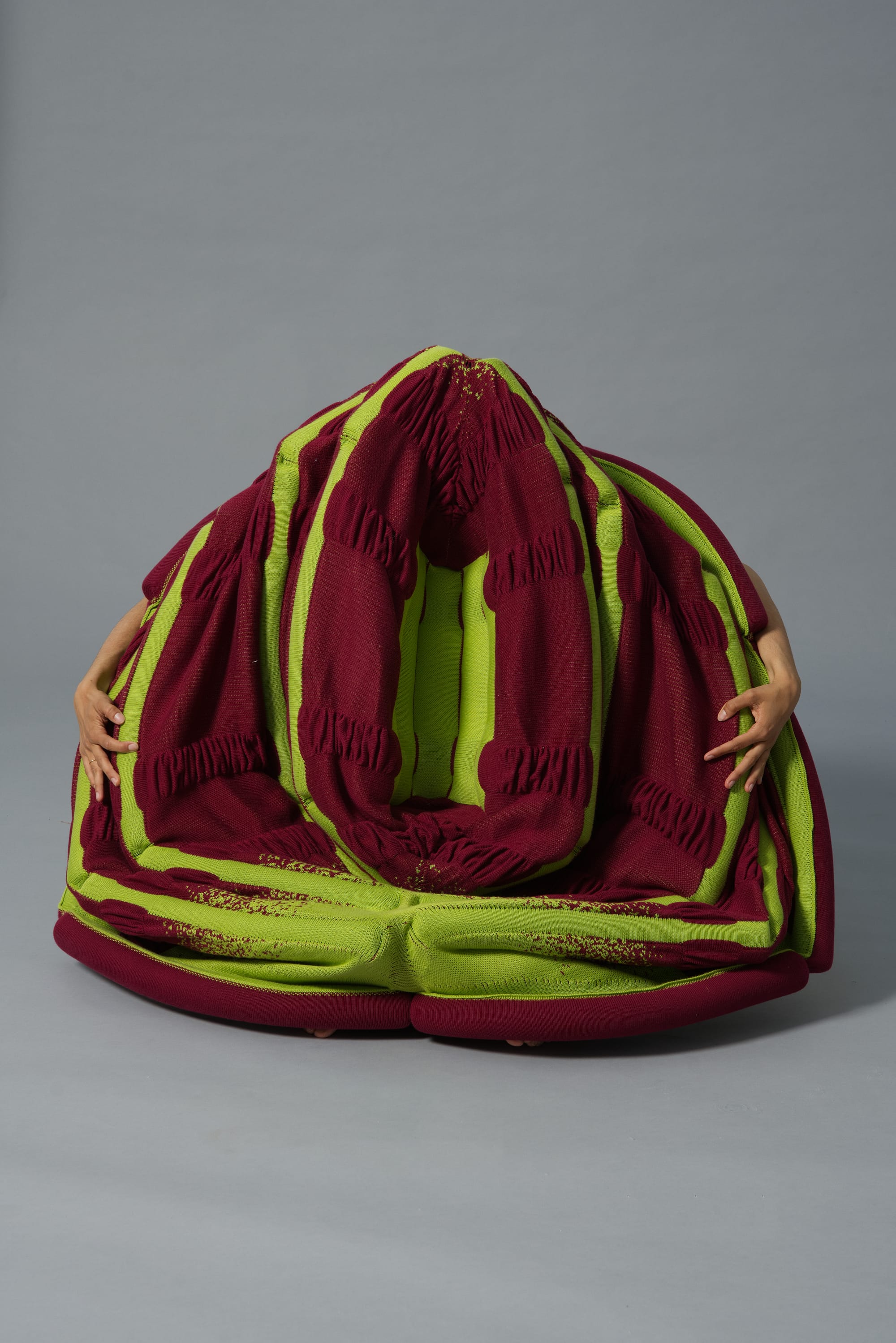
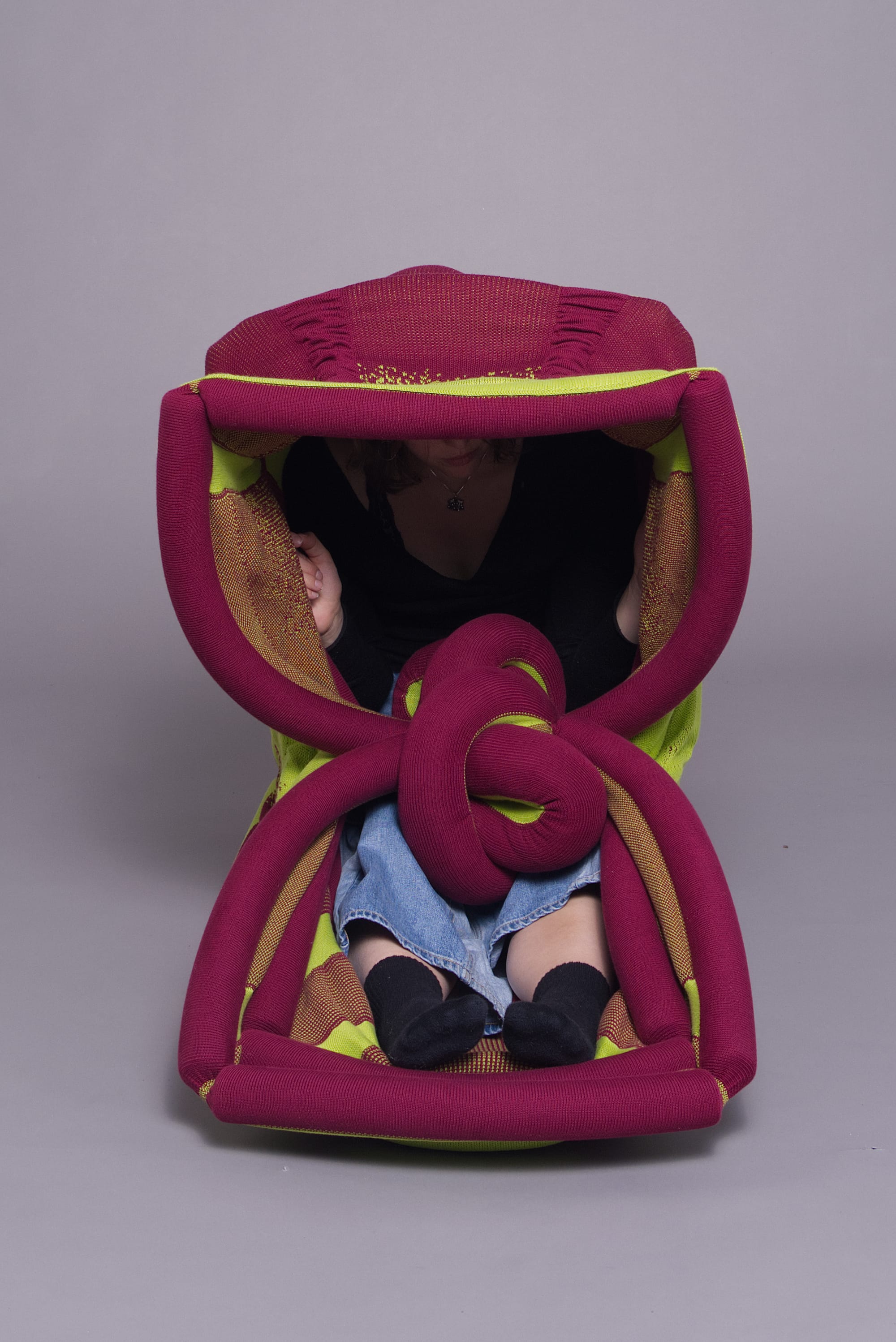
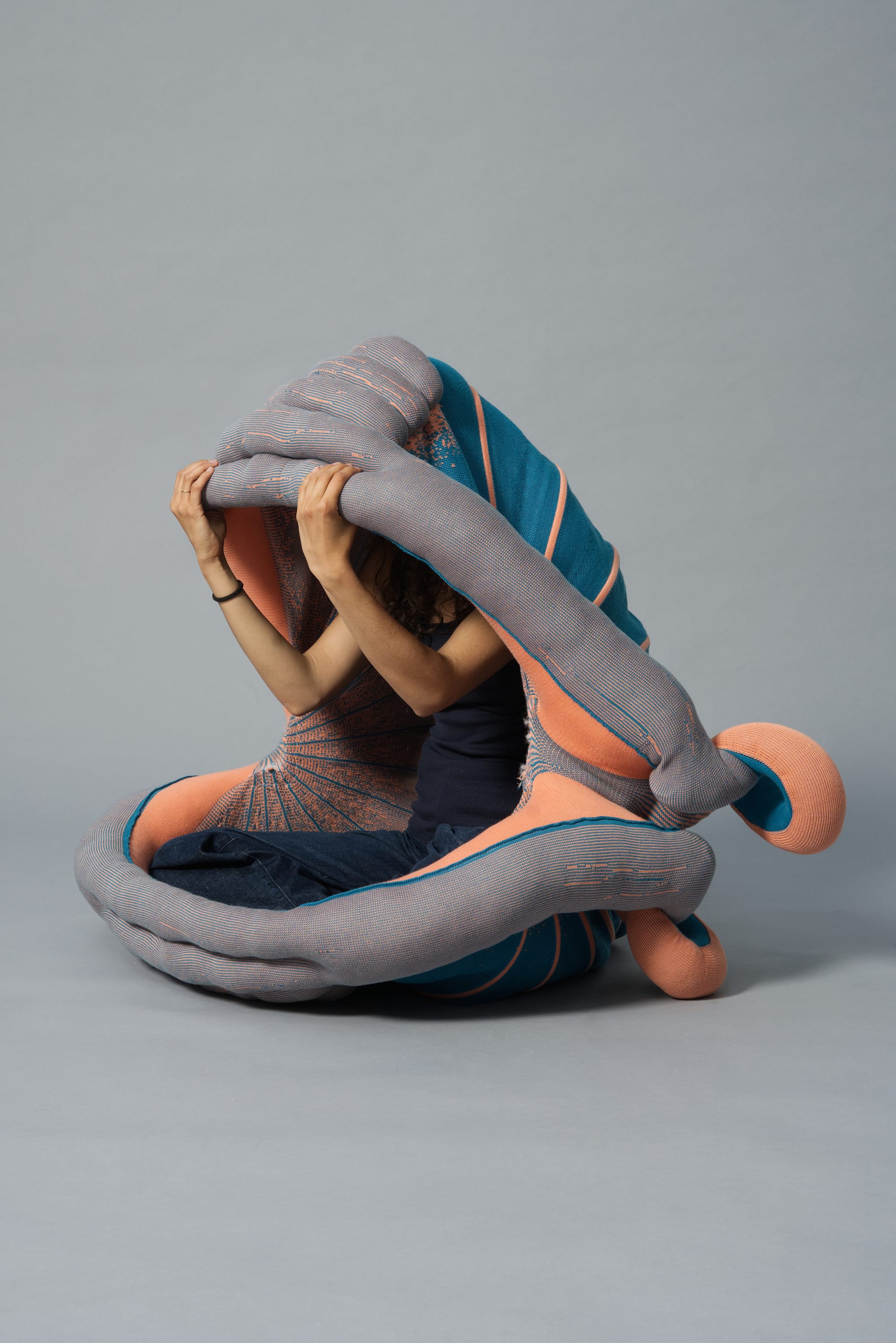
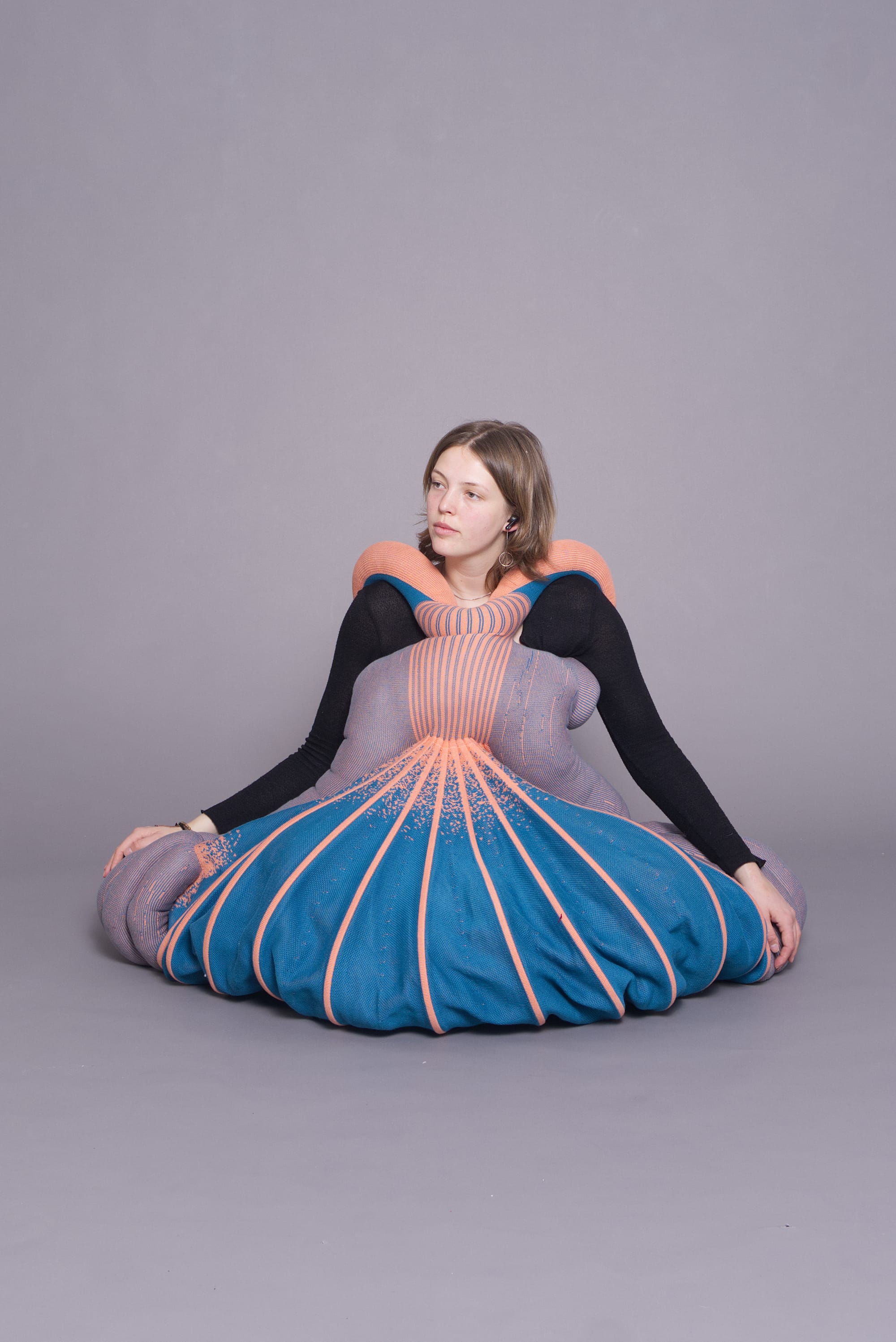
The Master’s programme allowed her to deepen her understanding of textile techniques while expanding her exploration of interaction through material and form. This journey led to the creation of Amorphous Objects, a collection of eight interactive pieces: Tussuq, Zoandi, Noulis, Emone, Nesphe, Brydo, Potsli and Roebelli. Each object is inspired by different forms and movements found in nature, yet they are connected through a shared approach to flexibility, tactility and transformable shapes. Forming ambiguous objects that resist a fixed function.
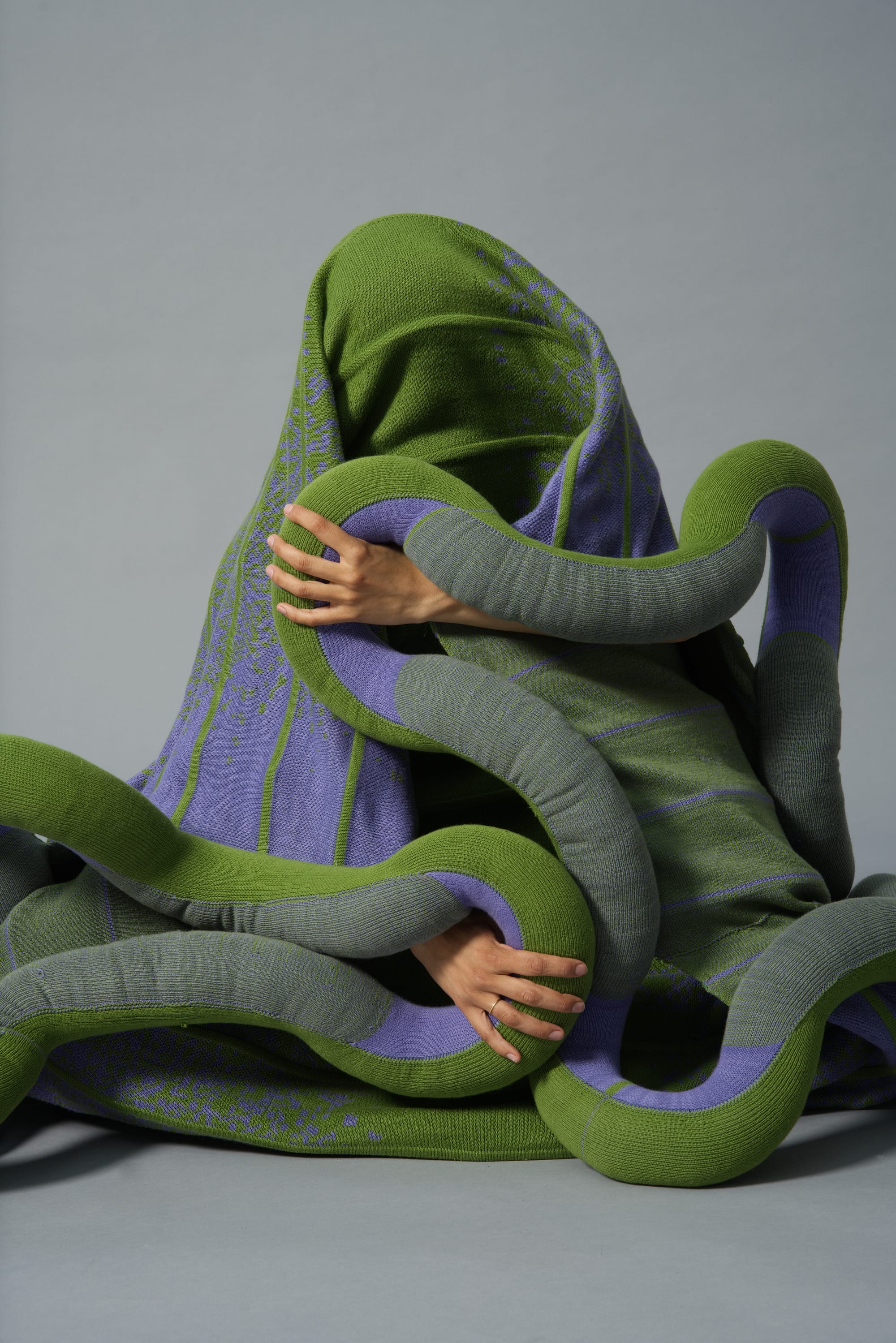
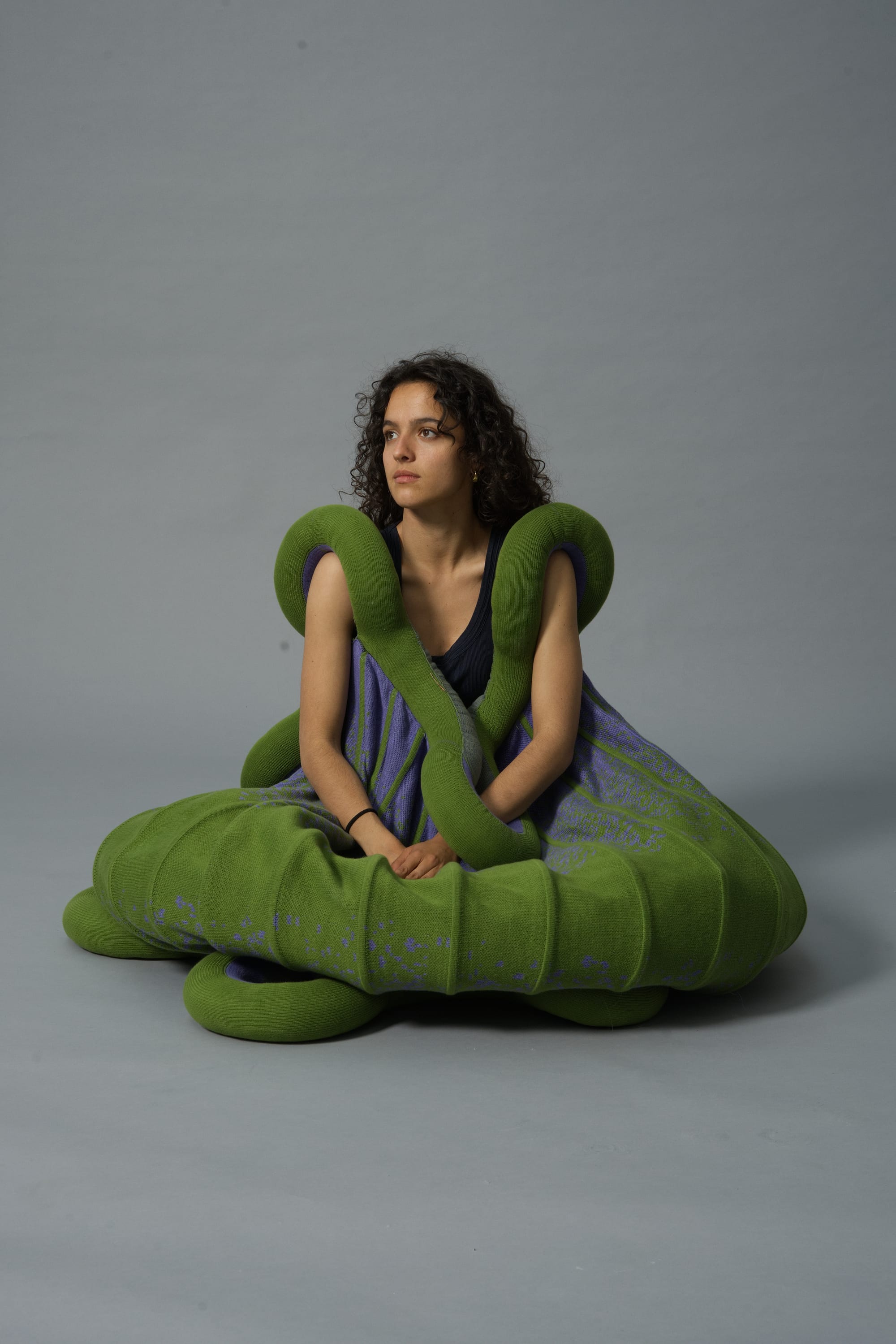
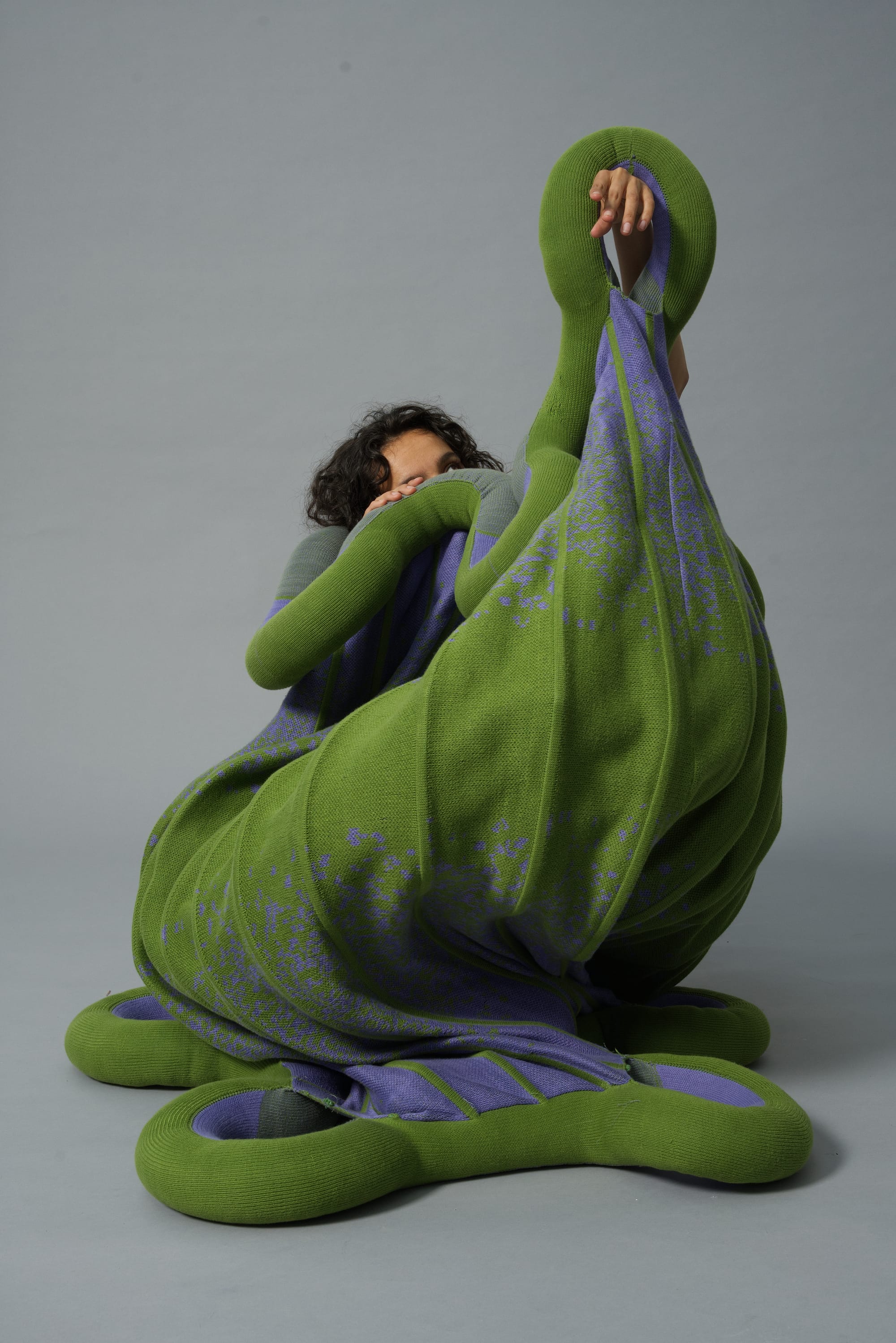
Zoandi by Luna Haverkorn. Photography by Kasper Heden Andersen.
Guided by ideas from cognitive psychology and human behaviour, Amorphous Objects began with a question: what happens when an object does not prescribe how it should be used?
"Most products are designed to guide behaviour towards a single function. I became interested in designing for exploration instead. Looking into affordances and discoverability, helped me think about how an object can suggest possibilities without prescribing them."
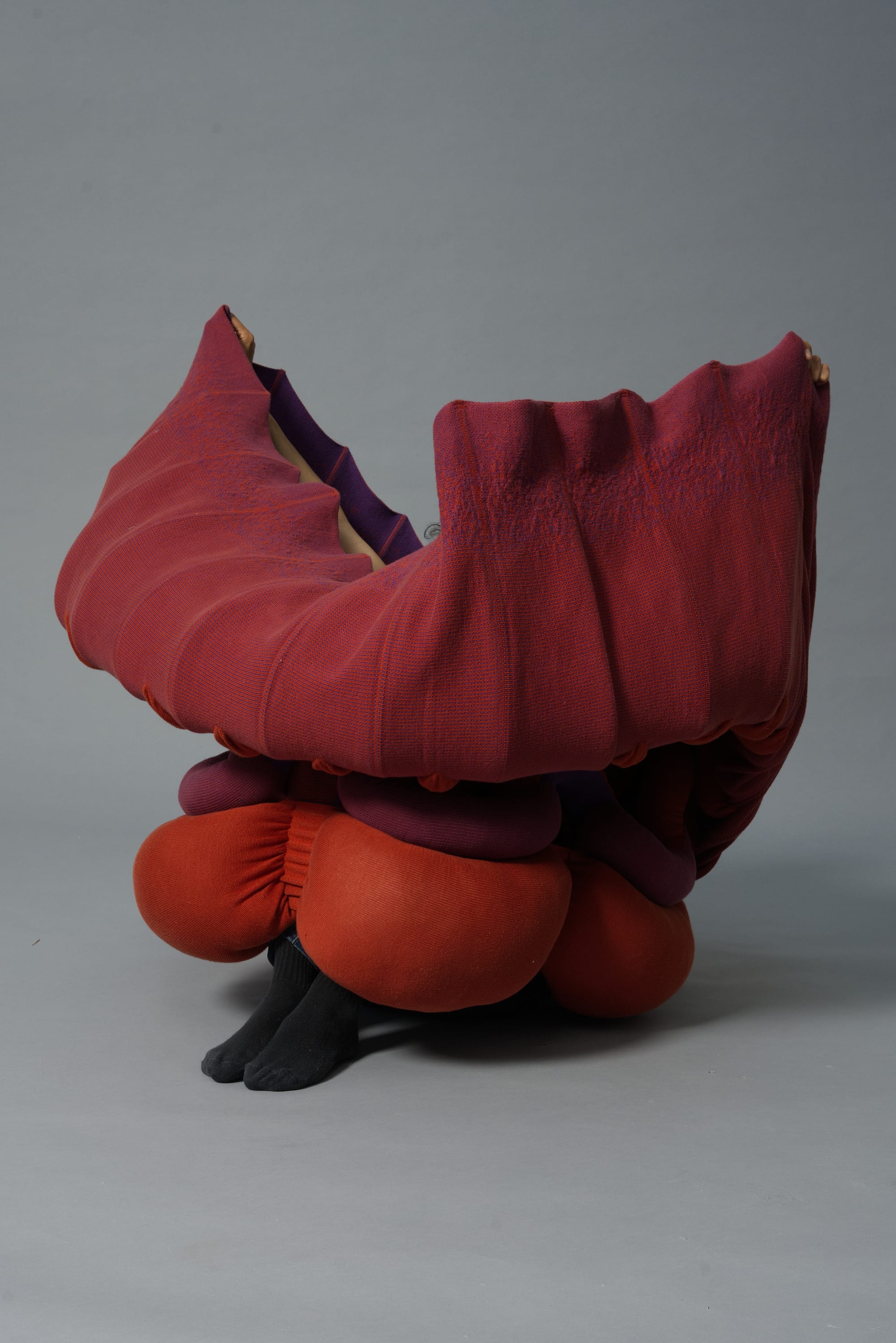
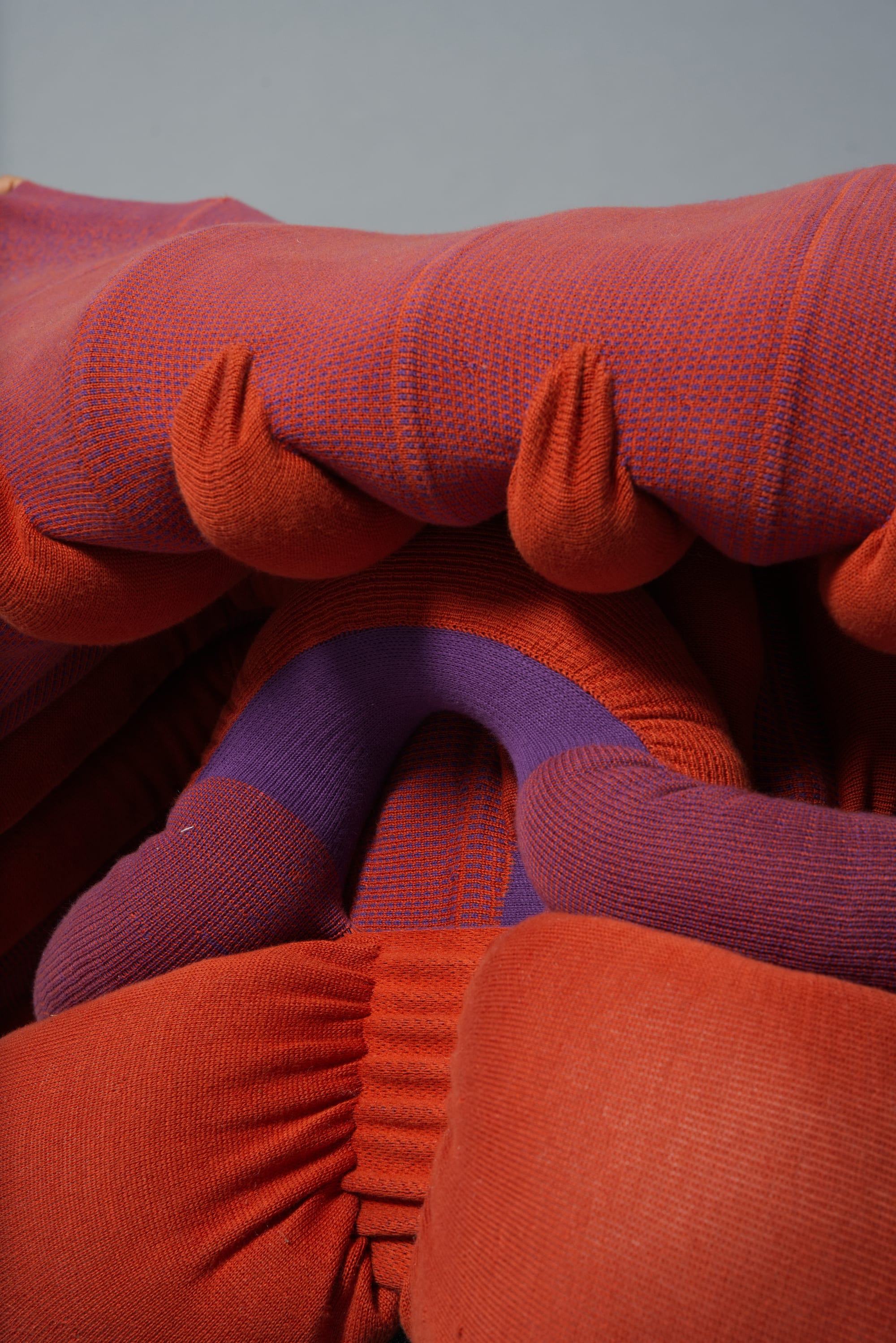
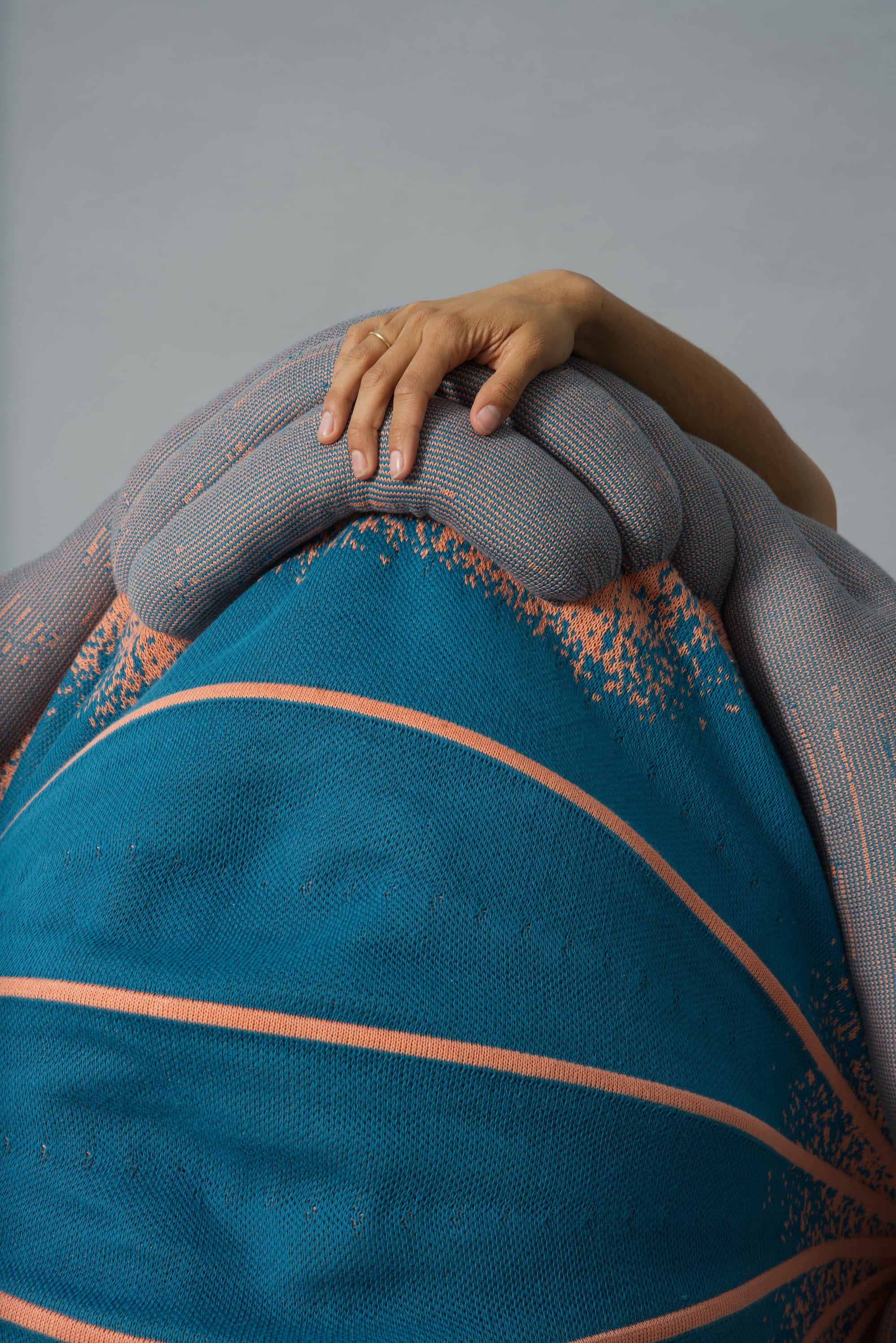
Experimenting with knitted samples, exploring structure, colour, filling and construction, Luna begins the design journey by developing her first prototypes. By inviting people to interact with these early iterations, she opens the process to conversation and discovery, often revealing possibilities she had not anticipated. Her objects follow an ongoing cycle of making, testing and refining, a process she describes as research through making.
Rather than prioritising efficiency or a predetermined function, the objects invite users to bend, fold, stretch and reshape them, encouraging curiosity, experimentation and new forms of interaction. Through play and exploration, Luna reimagines the relationship between people and objects, creating opportunities to experience materials in more intuitive and unexpected ways.
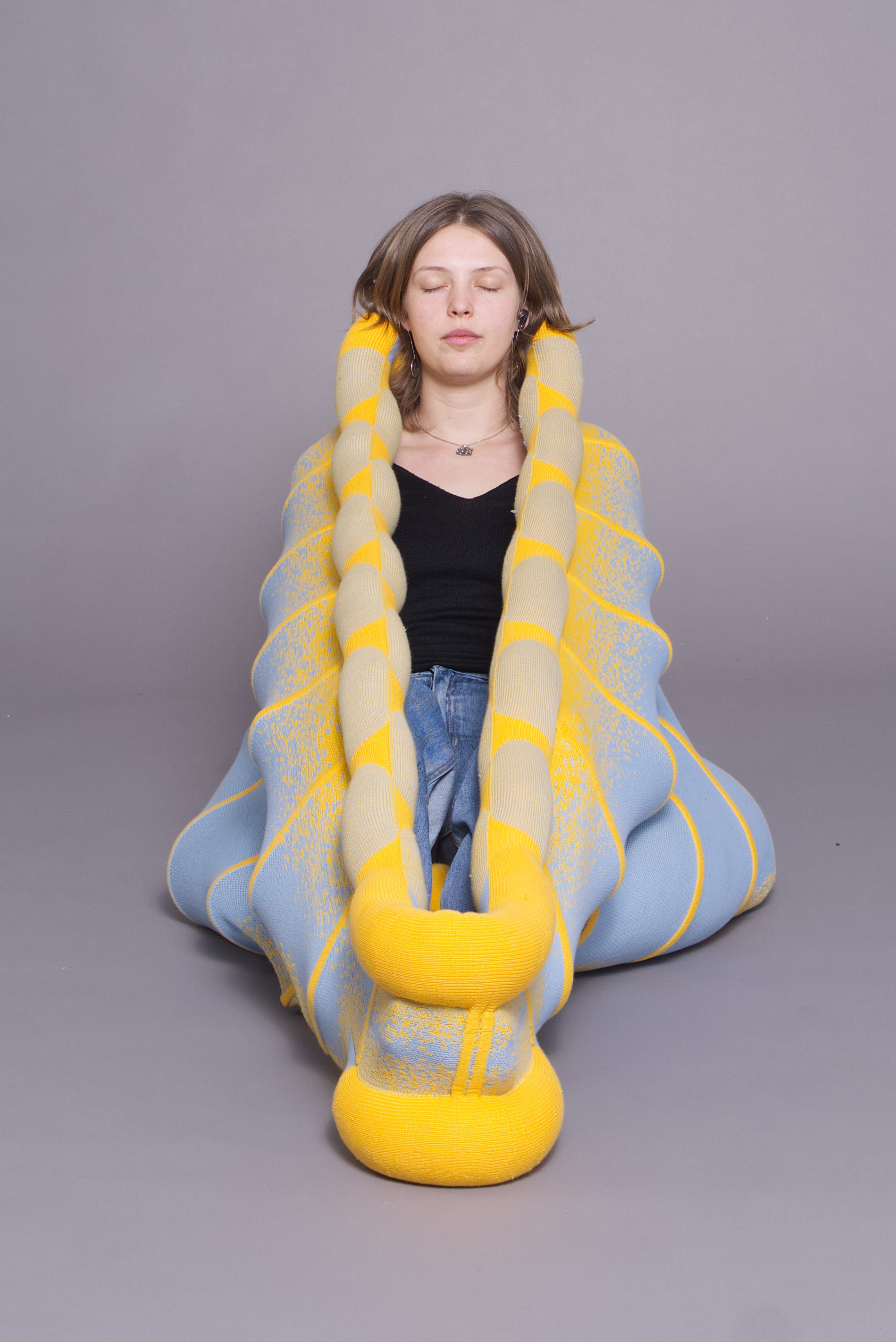
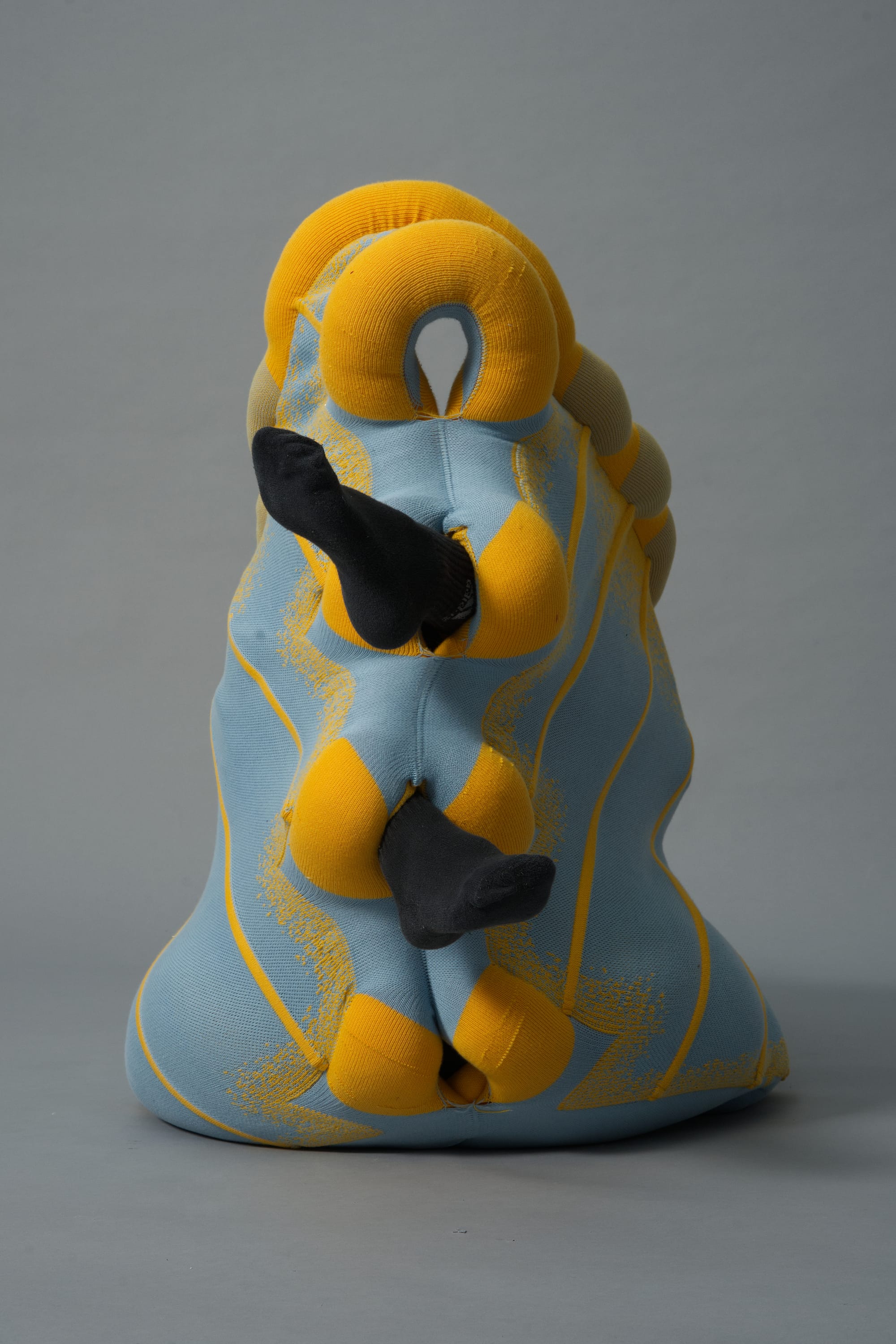
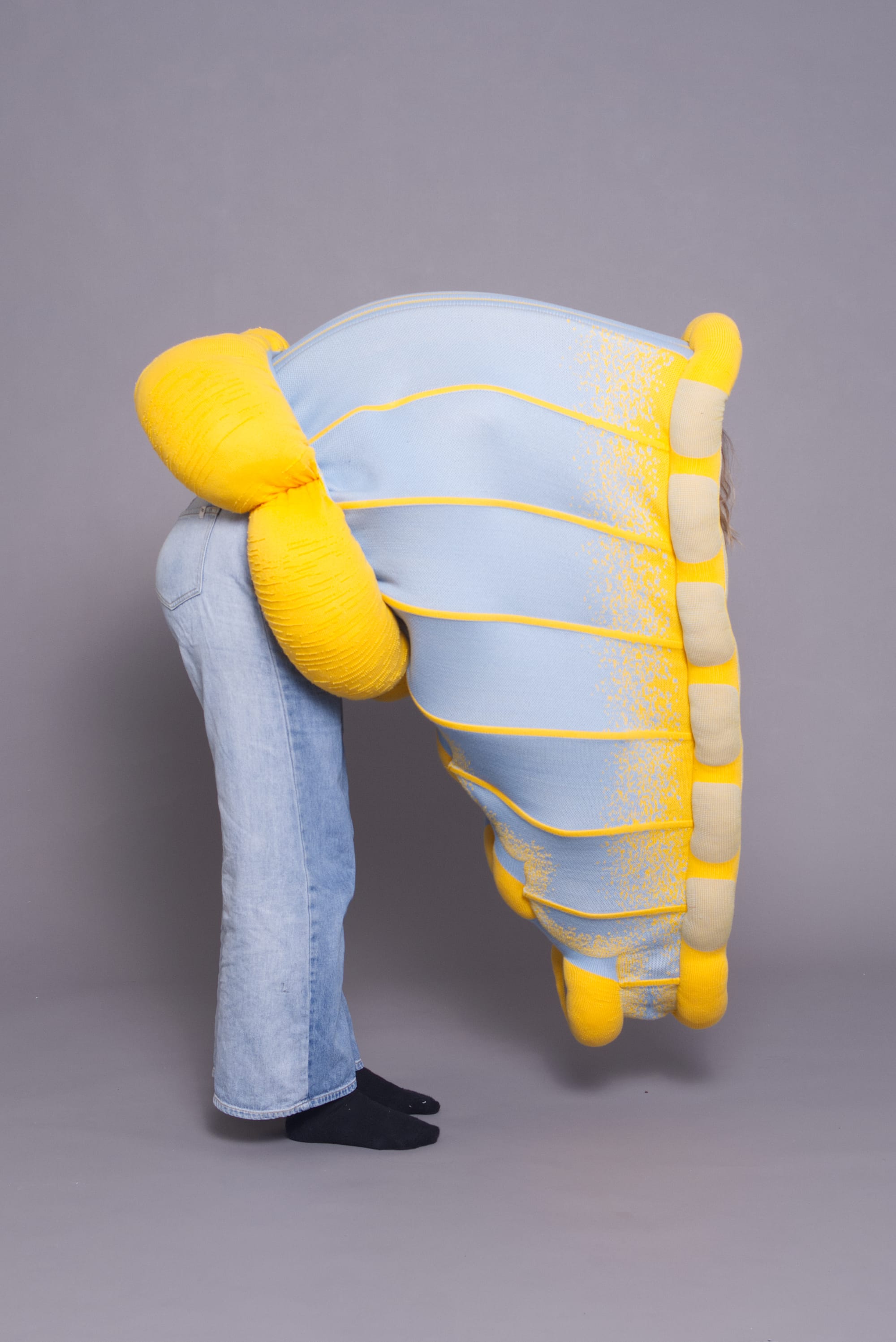
"I like the idea that someone can return to the same object on different days and discover something new each time. That openness allows people to build a more lasting relationship with the object rather than seeing it as furniture with a fixed purpose."
As a core value of her practice, Luna approaches sustainability through both the making process and the envisioned lifespan of her objects. During the process of partial knitting, she resolves structural challenges through the textile itself rather than relying on additional materials, allowing for fully fashioned forms with minimal material waste.
Through the individualisation and adaptability of each object, Luna envisions a more lasting relationship between people and their belongings. Rather than encouraging replacement, her work invites users to continue engaging with and caring for objects over time, aspiring to extend their lifespan through personal connection.
Looking ahead, Luna Haverkorn continues to explore the evolving potential of textile interaction design, investigating how Amorphous Objects can adapt to different contexts, from neurodivergent experiences to public and interior spaces. Through ongoing experiments with scale, knitted structures and integrated elements such as lighting, she continues to explore the possibilities of sustainable materials and human centred design. Her work aims to encourage autonomy while inviting people to reconsider their relationship with the objects they live alongside.
If you're interested in learning more about Luna Haverkorn or exploring a potential collaboration, you can visit her website to discover upcoming projects, ongoing research and the vision driving her work.
To stay up to date with more innovative design concepts and approaches like this, feel free to subscribe.
PROJECT DETAILS
Location: Borås, Sweden
Product Designer: Luna Haverkorn
Photography: Luna Haverkorn