Insect Architecture by Collective Fabula
This project explores the importance of interconnected ecosystems, with a focus on providing habitats for pollinators in urban environments.


Rather than seeking to solve global biodiversity challenges, Fabula positions Architecture for Solitary Bees within a broader ecological discourse, critically re-examining the relationship between humans and nature in a contemporary context.

Collective Fabula is based in Riga, Latvia. The duo brings together expertise in creative sustainability, human ecology and design. Their work is grounded in epistemological principles, examining how knowledge is formed, its origins and limitations, and how human-centred perspectives shape our understanding of the natural world. Through their projects and methodologies, Fabula aspires to rethink dominant design approaches and reconsider the hierarchies of knowledge that underpin them.
Addressing the anthropocentric design of urban environments, the project draws attention to the long-term ecological consequences of human-centred planning. Contemporary lifestyles, urban densification and the fragmentation of green spaces contribute to habitat loss and declining insect populations, while the use of insecticides further threatens pollinators.
Despite their ecological importance, solitary bees often receive less attention than honeybees. They account for a significant proportion of bee species worldwide and play a vital role in plant reproduction and the maintenance of healthy ecosystems and supporting food production. Unlike honeybees, solitary bees do not live in colonies with a queen and worker hierarchy. Each female independently builds and provisions her nest, often in underground burrows, wood cavities or hollow plant stems.
To address these topics and make cities ecologically viable in the long term, the European Union's Biodiversity Strategy of 2030 calls for improving the ecological condition of the environment, especially protecting small pollinators.
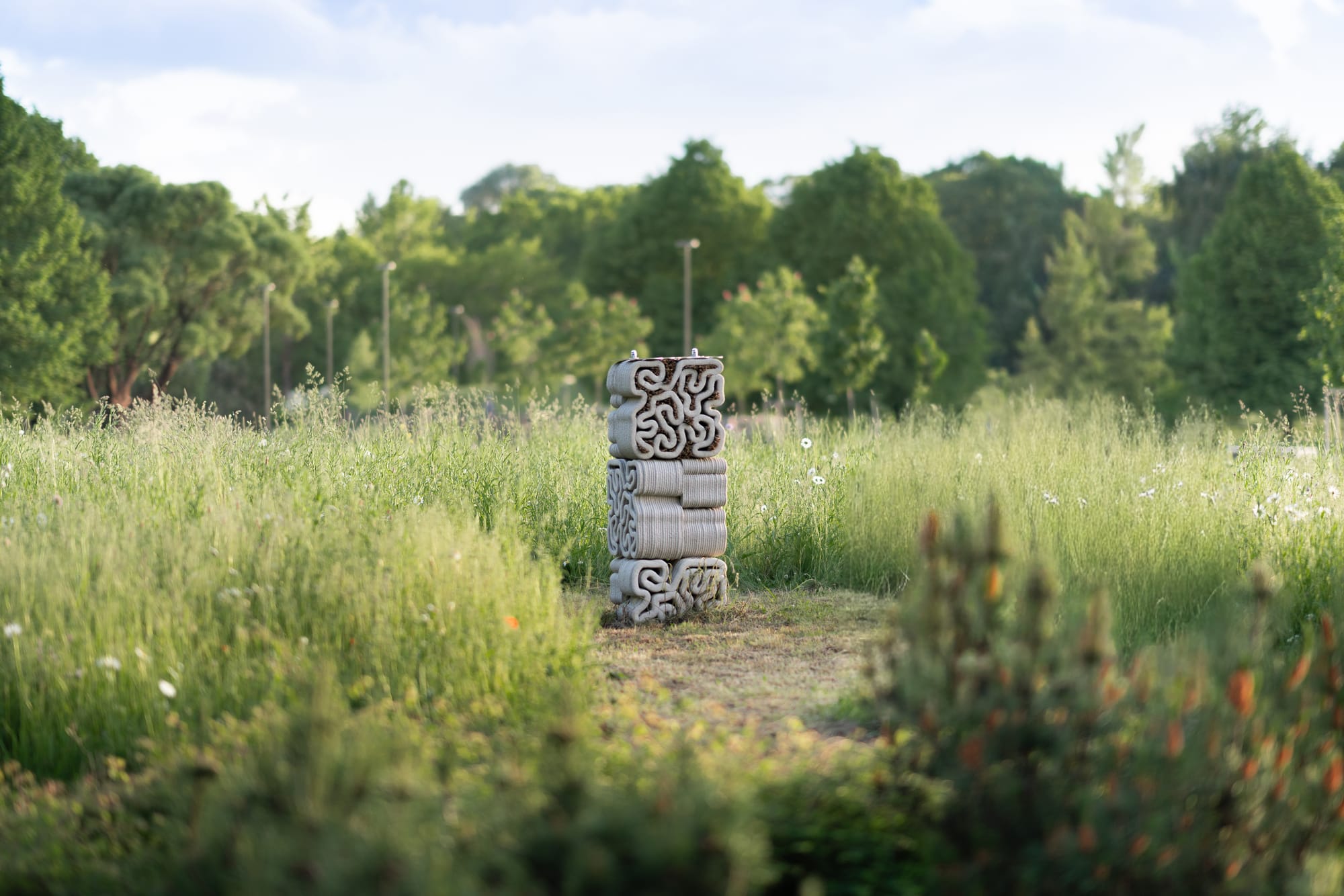
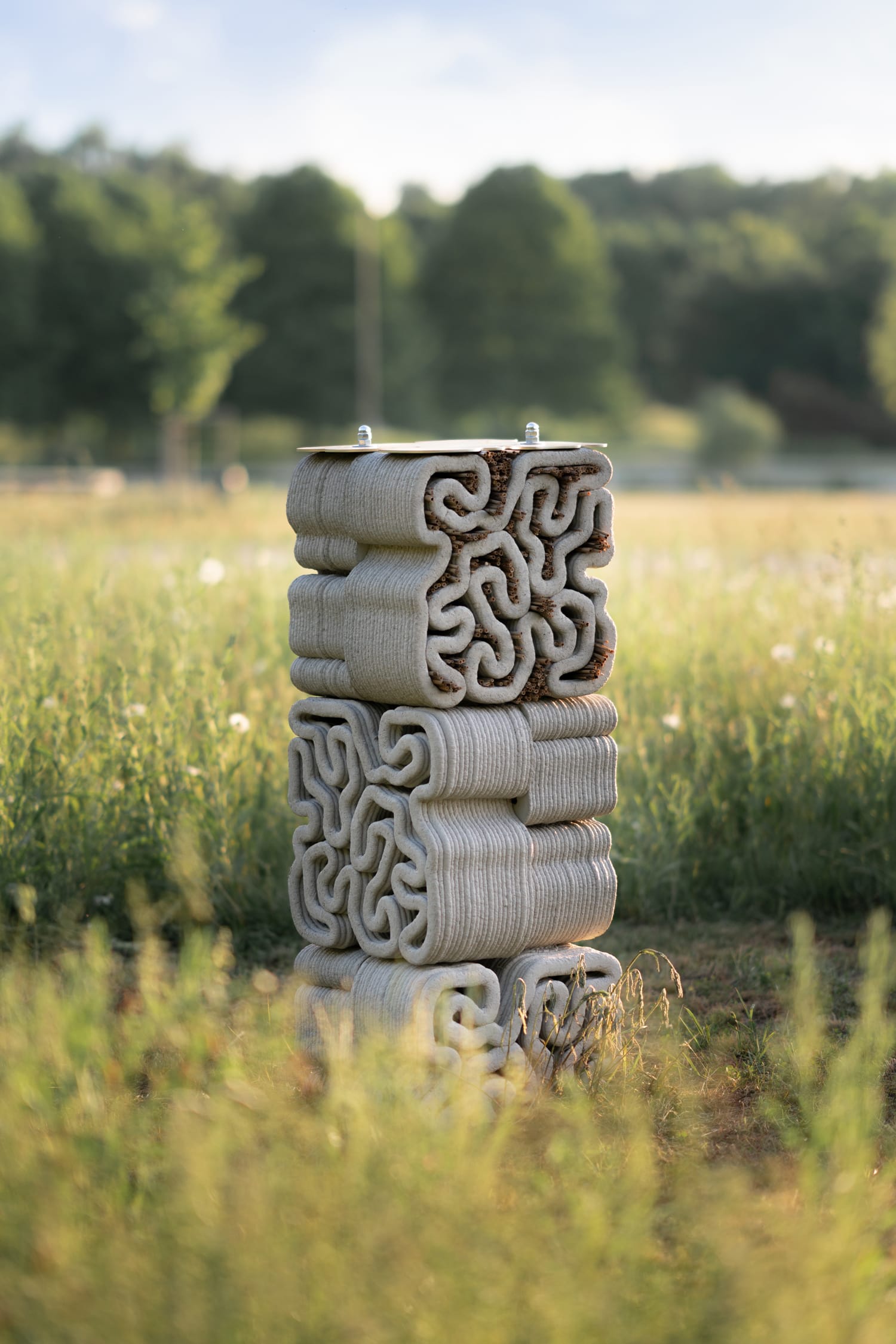
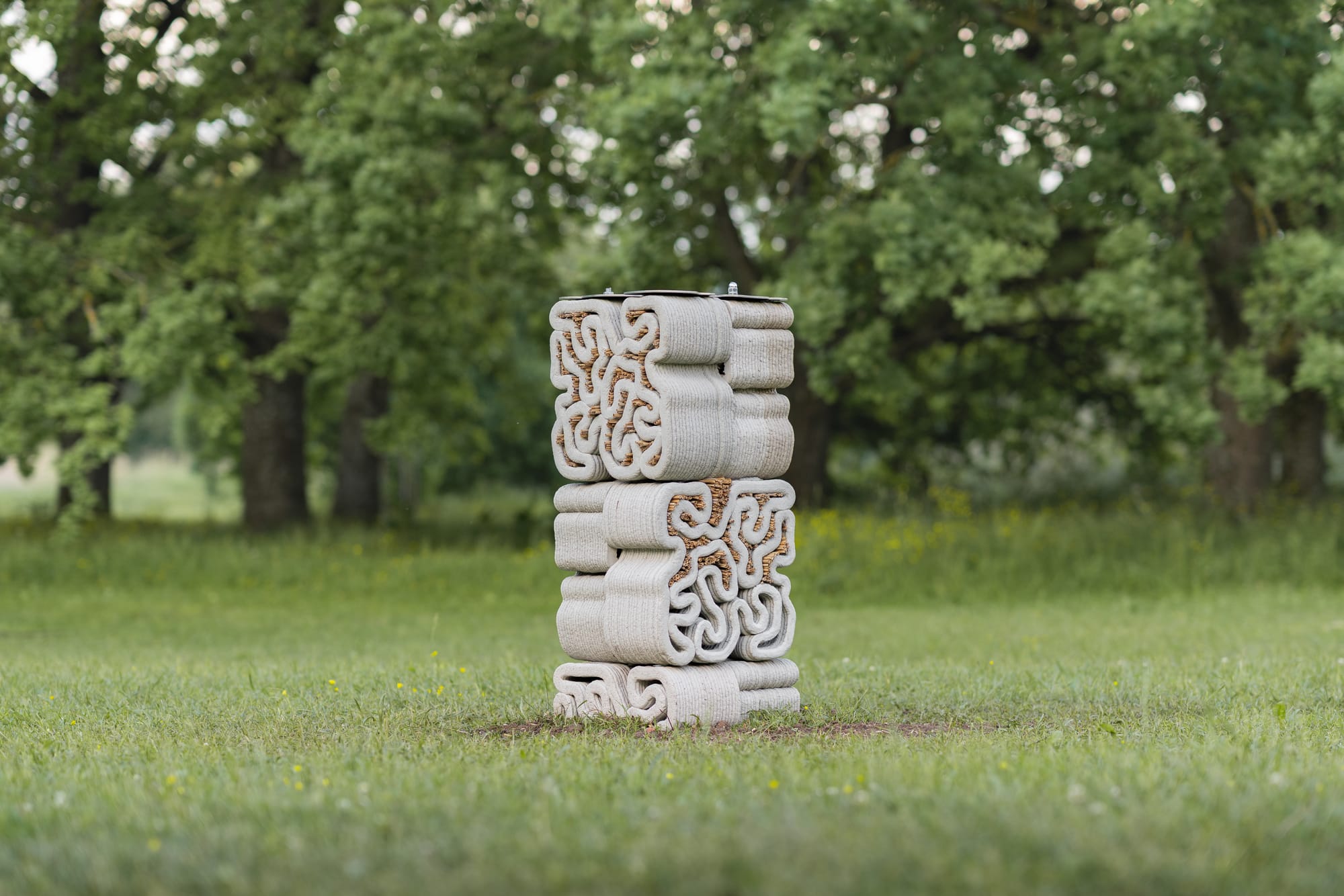
Situated within fragmented pockets of biodiversity across Riga, Insect Architecture was informed by consultation with entomologist Uģis Piterāns. Its parametric design was developed by Collective Fabula in collaboration with architect Helmuts Nežborts. Together with the RTU 3D Concrete Printing Laboratory, the team explored alternative materials and fabrication methods to develop lower-emission concrete mixes in which cement is partially or entirely replaced with ash.
The resulting 3D-printed concrete structures are filled with reed stems, providing nesting habitats for solitary bees of the Anthophila group, which comprises more than 250 species in Latvia. As these bees do not form social colonies, the microstructures offer individual nesting opportunities within the urban landscape. Consulted by Latvijas Dabas fonds and Rīgas meži, the installations were placed in urban meadows across Riga.
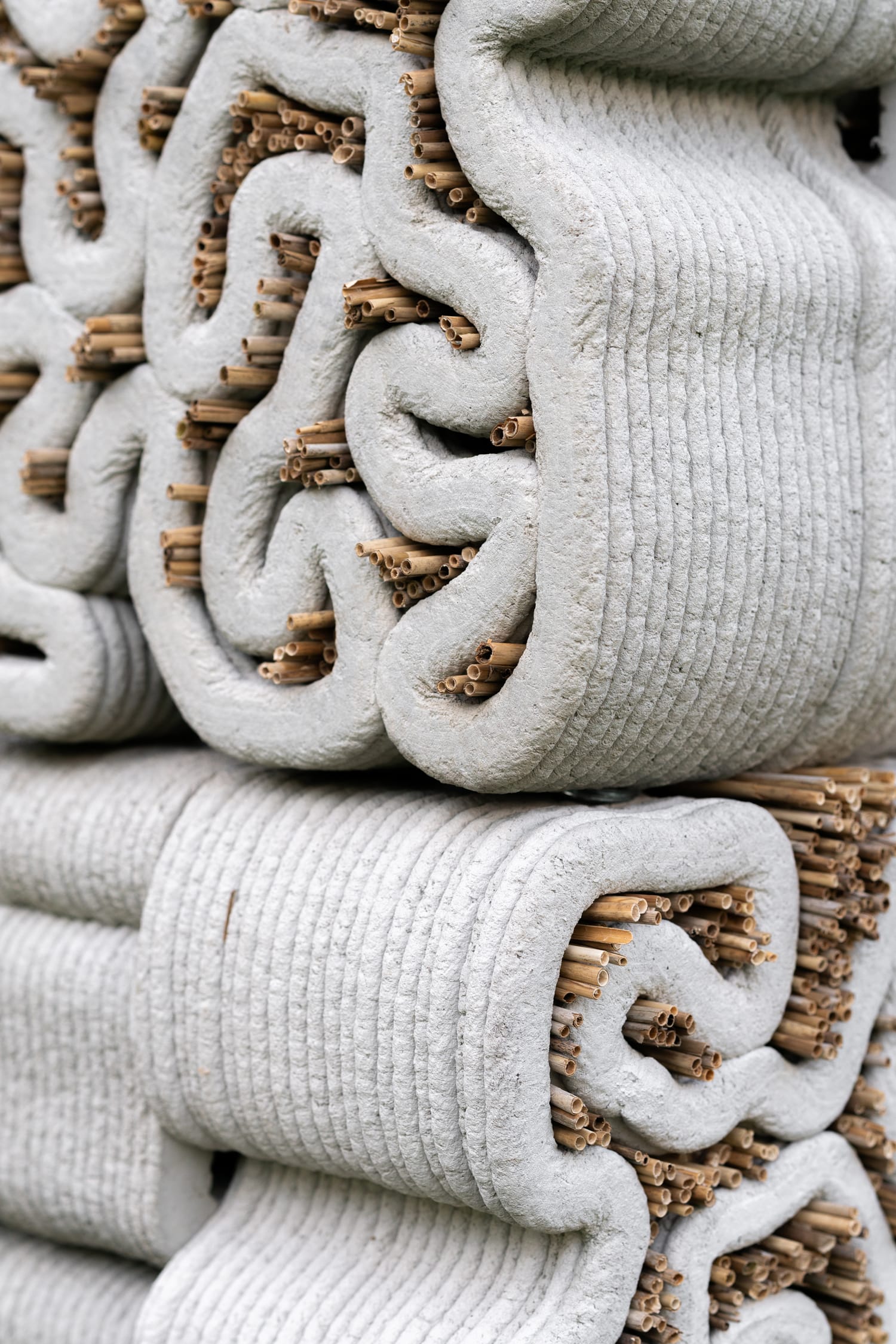
Through Architecture for Solitary Bees, Collective Fabula explores how architectural design can extend beyond human-centred needs to acknowledge the ecological systems that sustain urban environments. By bringing together parametric design, alternative concrete materials and species-specific nesting structures, the project contributes to a broader discussion on biodiversity-conscious architecture and the role of design in creating more ecologically responsive cities. Developed in Riga, Latvia, the work offers a perspective on how design can reconsider its relationship with other species and contribute to more inclusive urban futures.
If you're interested in learning more about Collective Fabula, or exploring a potential collaboration, you can visit their website to discover upcoming projects.
To stay up to date with more innovative approaches to architecture, design, and the future of our built environment, feel free to subscribe to architravels.
PROJECT DETAILS
Name: Insect Architecture
Design: Collective Fabula and Helmuts Nežborts
Project Location: Riga, Latvia
Photography: Jānis Klaučs
Year: 2026