New York Design Guide
New York became a global centre for architecture, art and design throughout the 20th century, from MoMA’s 1932 Modern Architecture exhibition to the post-war years, when the city came to be widely seen as the new centre of the Western art world.

The Oculus
2016 | Architect Santiago Calatrava
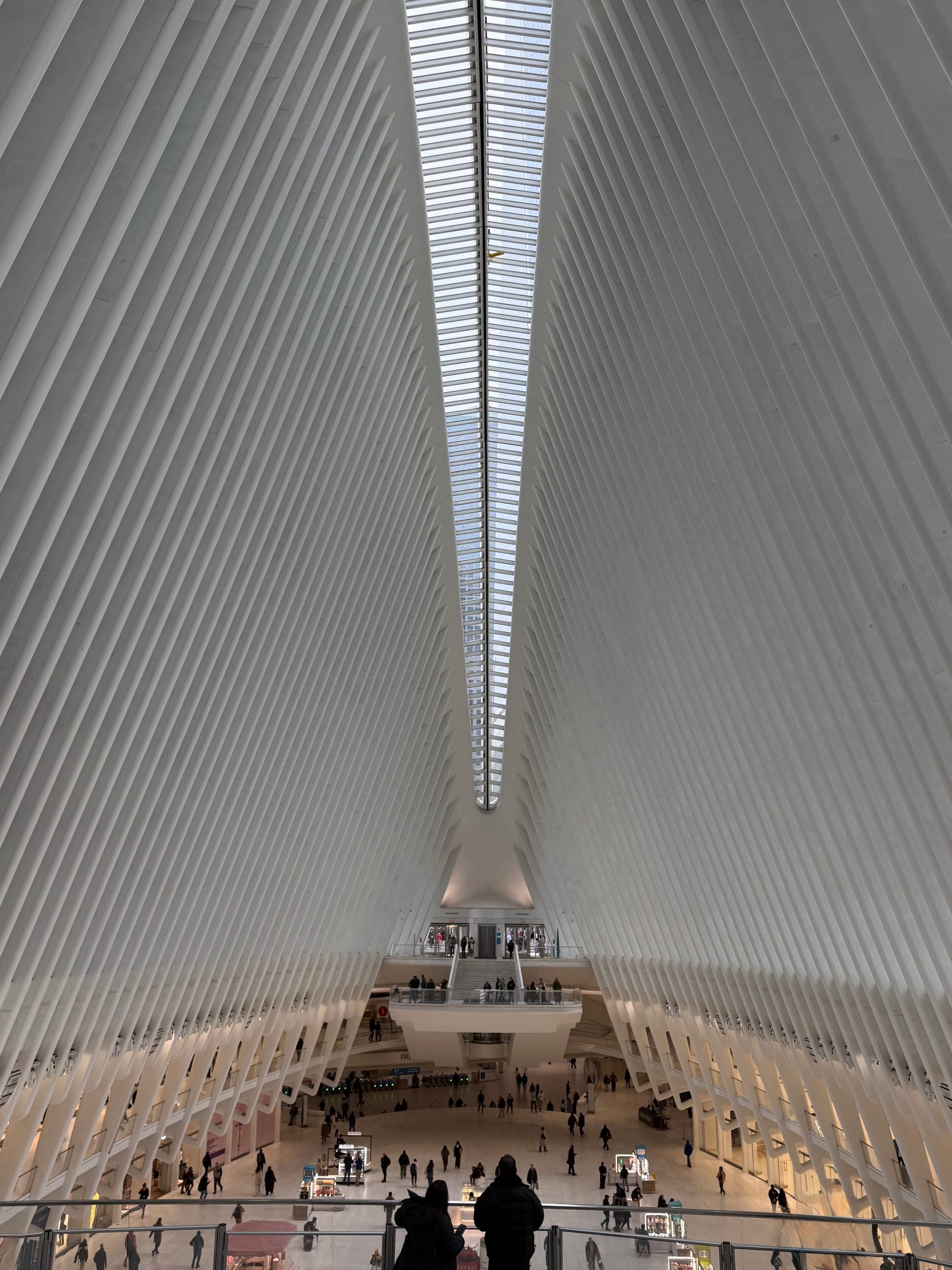
The Oculus forms the main hall of the World Trade Center Transportation Hub in Lower Manhattan, designed by Santiago Calatrava and partially opened in March 2016. Its sculptural form draws on the image of a bird released from a child’s hands, symbolising peace and renewal in the aftermath of the September 11 attacks. Inside, white steel ribs rise towards a long, operable skylight that opens annually on 11 September, the skylight opens and daylight falls across the hall, making remembrance part of the building itself.
Little Island
2021 | Architect: Heatherwick Studio with MNLA
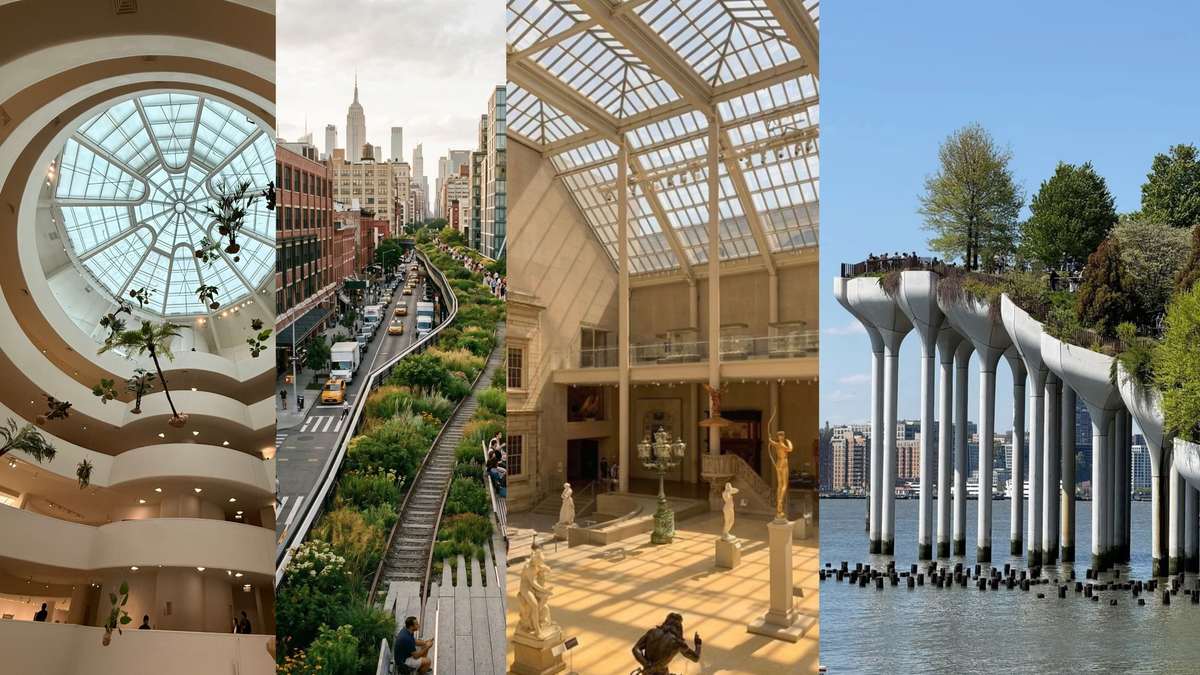
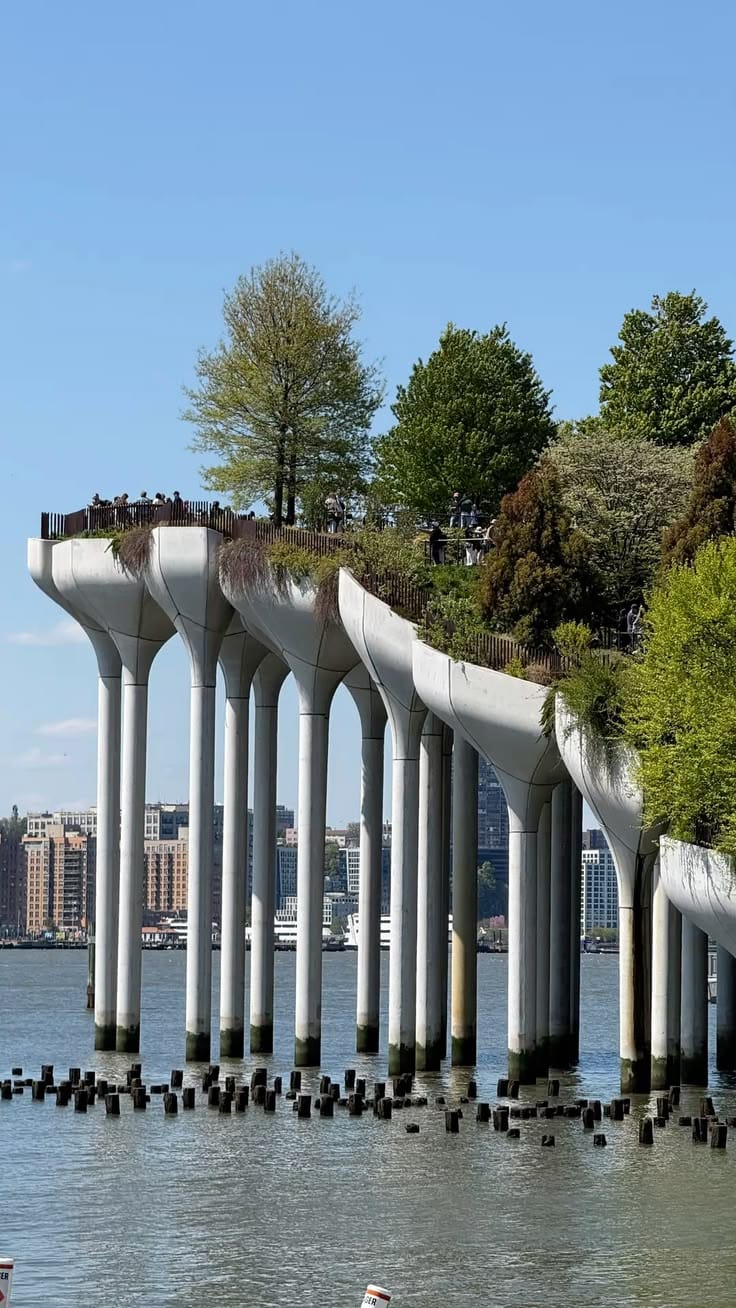
Little Island opened in May 2021 at Pier 55 in Hudson River Park, New York. Spanning 2.4 acres above the Hudson River, the park is supported by 132 precast concrete structures known as “tulips”, designed by Heatherwick Studio. The landscape architecture, led by Signe Nielsen of MNLA, shapes a varied terrain of gardens, pathways and performance spaces. The project was largely funded by the Diller–von Furstenberg Family Foundation, with additional support from the City of New York.
The High Line
2009 | Architecture and Design: Diller Scofidio + Renfro, Landscape Architecture: James Corner Field Operations
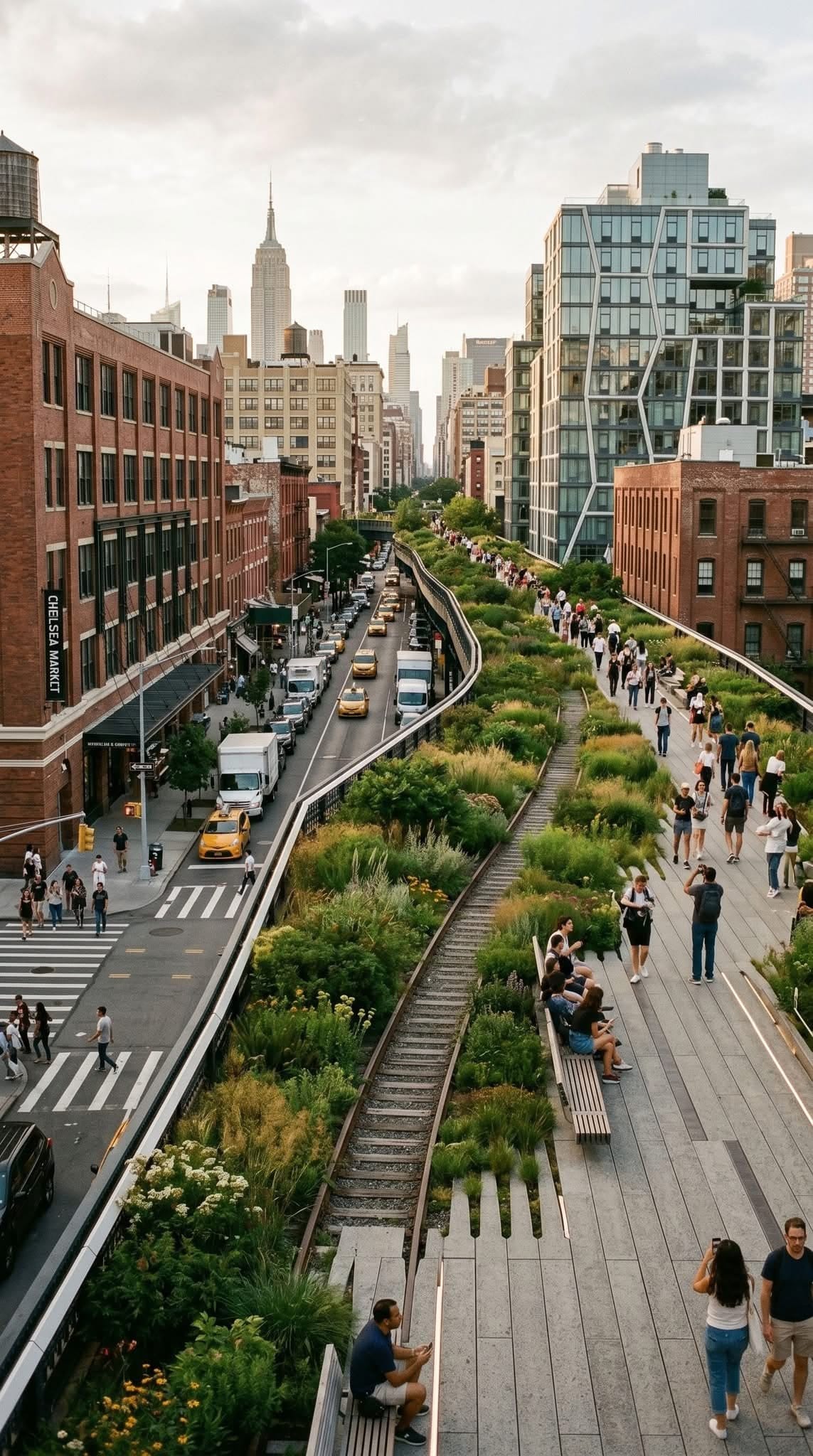
Built in 1934 as an elevated freight railway, the High Line carried its last train in 1980. Saved from demolition through the efforts of Friends of the High Line, founded by Joshua David and Robert Hammond in 1999, its first section reopened as a public park in June 2009. Planted by Piet Oudolf, the 2.33-kilometre-long greenway now stretches from Gansevoort Street to West 34th Street.
Amélie Maison d’Art
2024 | Founder: Amélie du Chalard
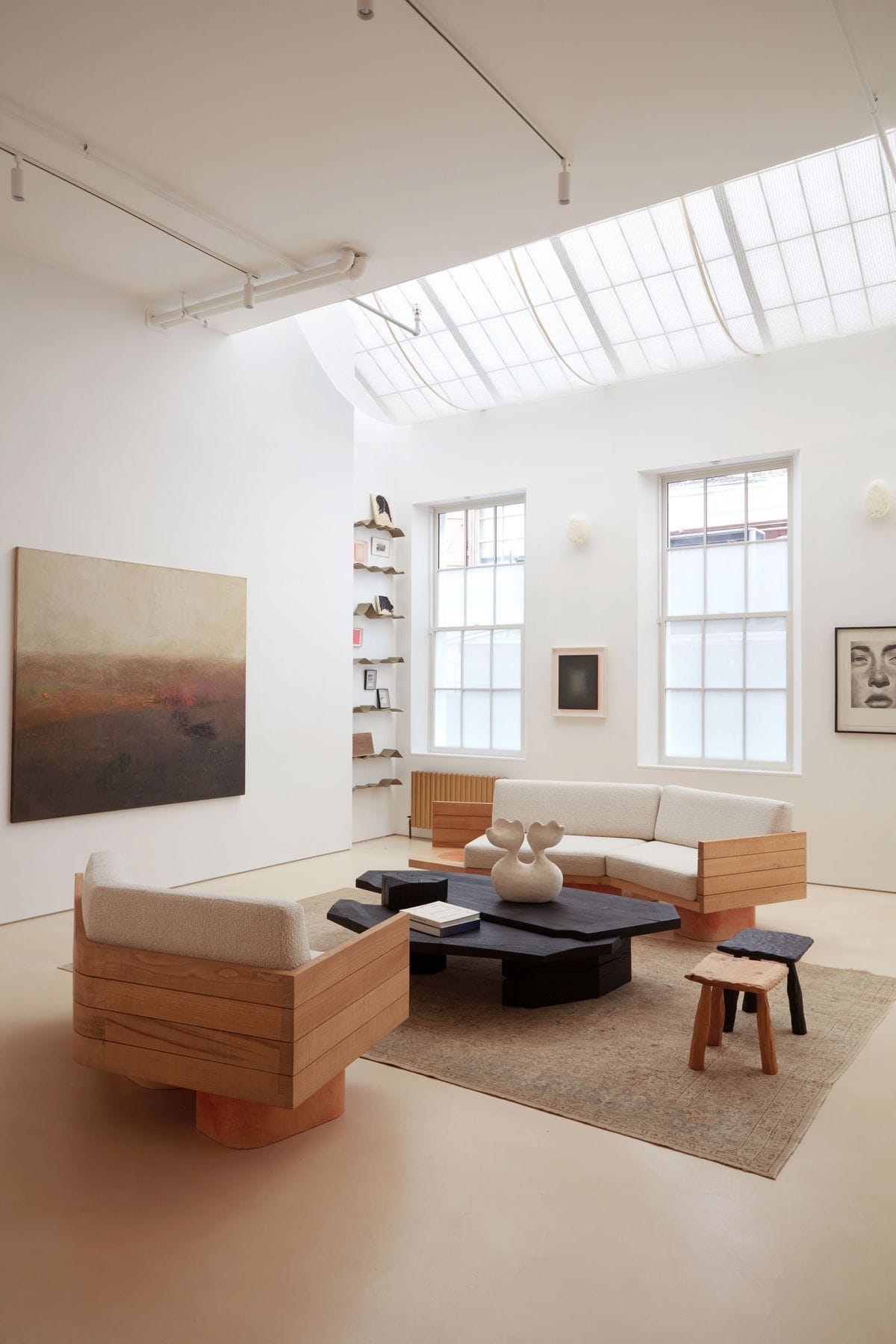
Founded by Amélie du Chalard in Paris in 2015, her gallery’s New York outpost opened in SoHo in spring 2024. Located at 85–87 Mercer Street in an 1873 building, the 4,000-square-foot space features 14-foot ceilings and a skylight. Arranged like a collector’s home rather than a conventional gallery, it brings together painting, ceramics and sculpture alongside furniture, fostering a dialogue between art, design and domestic space.
Salon 94
1915 | Founder: Jeanne Greenberg Rohatyn
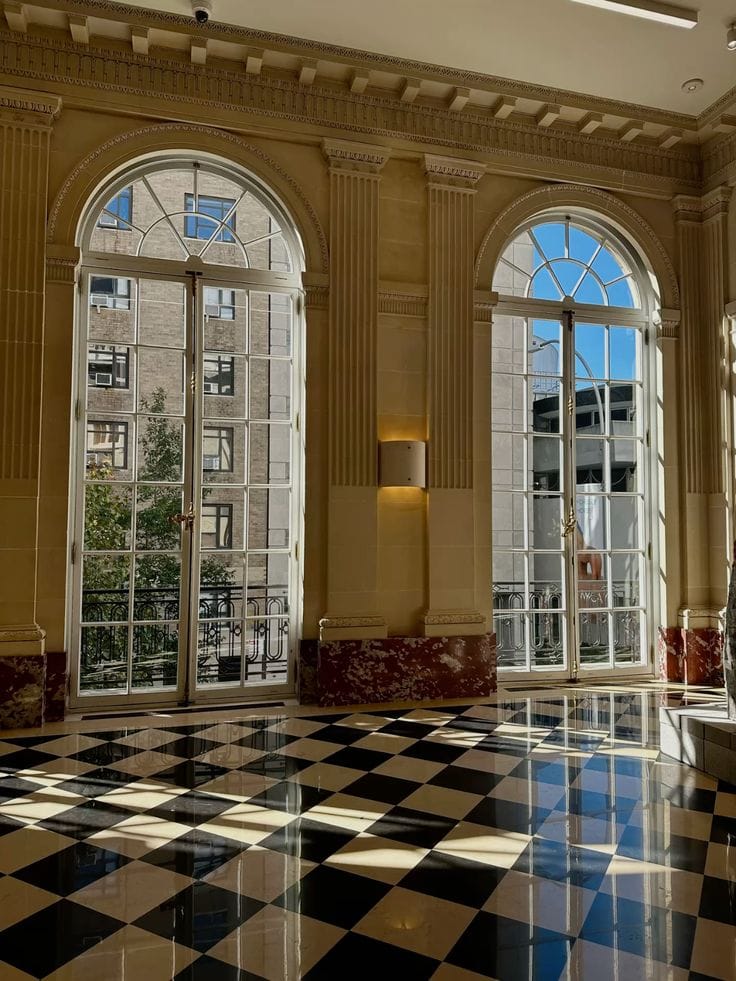
Located on Museum Mile, Salon 94 occupies a neo-Renaissance building at 3 East 89th Street, designed by Ogden Codman Jr. in 1913–1915 as an extension of Archer M. Huntington’s residence. Formerly home to the National Academy of Design, the building was restored by Rafael Viñoly before Jeanne Greenberg Rohatyn’s gallery opened there in March 2021.
Guggenheim New York
1943 - 1959 | Frank Lloyd Wright
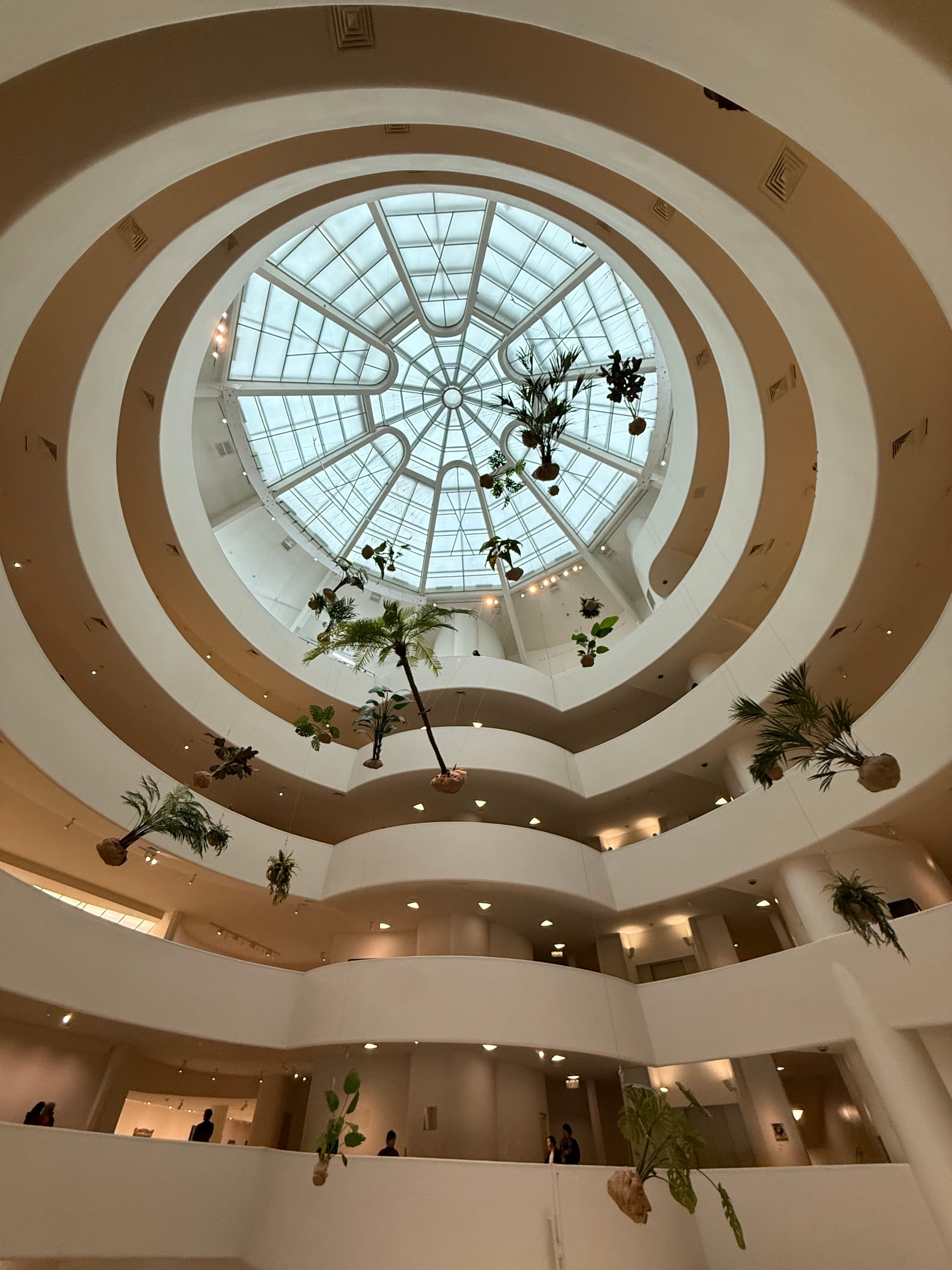
After years of delays and controversy, Frank Lloyd Wright’s spiralling museum on Fifth Avenue finally opened to the public in October 1959, six months after the architect’s death. Wright envisioned visitors taking the lift to the top before descending along a continuous ramp, encountering artworks along the way. Above the rotunda, a glass dome draws daylight into the heart of the building.
The Met
Est. 1870 | The American Wing
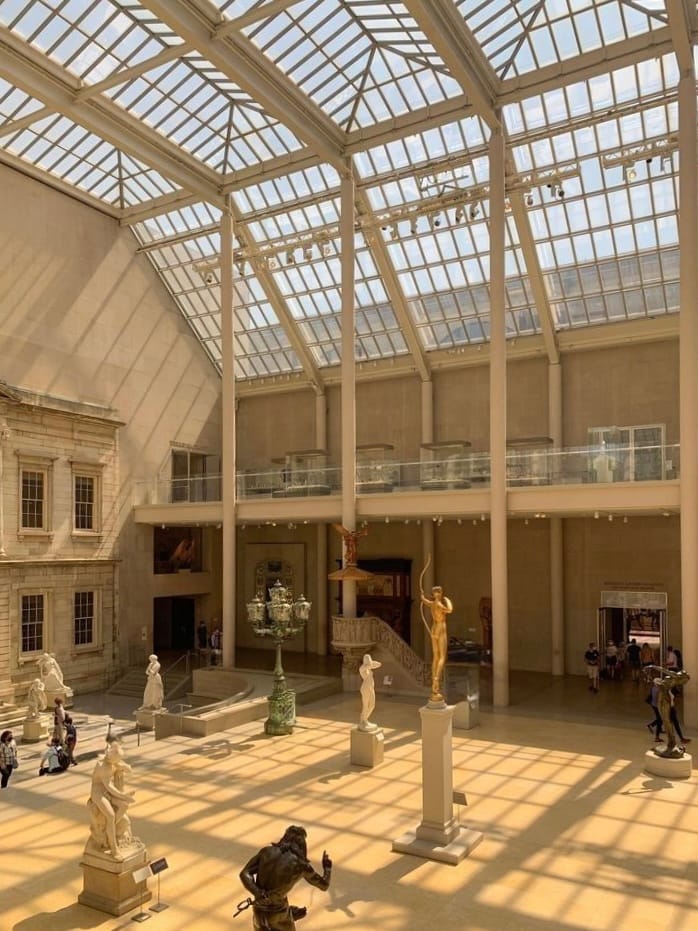
Founded in 1870, The Metropolitan Museum of Art moved to its current Central Park location in 1880. Within the American Wing, the glass-roofed Charles Engelhard Court illuminates its sculpture collection with natural daylight. One wall incorporates the facade of the Second Branch Bank of the United States, built on Wall Street in 1822–1824 and relocated to the museum in 1924, preserving a fragment of lower Manhattan within the gallery.
MoMA
Est. 1929 | Diller Scofidio + Renfro with Gensler, 2019
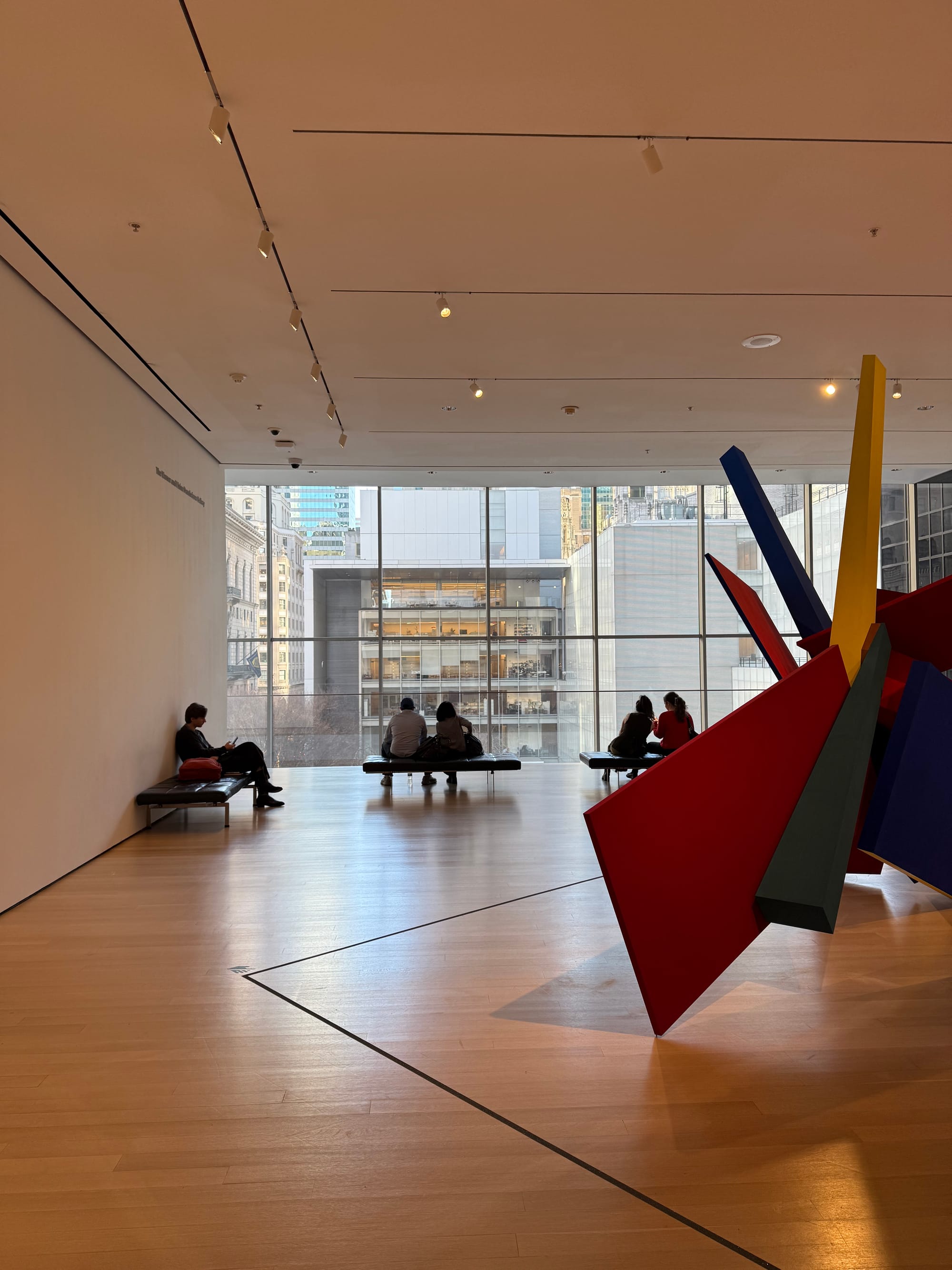
Founded by Abby Aldrich Rockefeller, Lillie P. Bliss and Mary Quinn Sullivan, the Museum of Modern Art opened in November 1929. It reopened in October 2019 following an expansion by Diller Scofidio + Renfro in collaboration with Gensler. On the fifth floor, Pablo Picasso’s Les Demoiselles d’Avignon (1907), painted in Paris, hangs above benches that invite visitors to pause and spend time with the work.
New York continues to reinvent itself through architecture, design and art. From the adaptive reuse of the High Line to contemporary galleries and world-renowned art museums, the city offers an evolving perspective on how spaces preserve history, shape culture and inspire ways of seeing the built environment.
For more sustainable architecture, innovative design and architecture and design guides, feel free to subscribe to architravels.